

What Is the Air Conditioner Dehumidifier Setting?
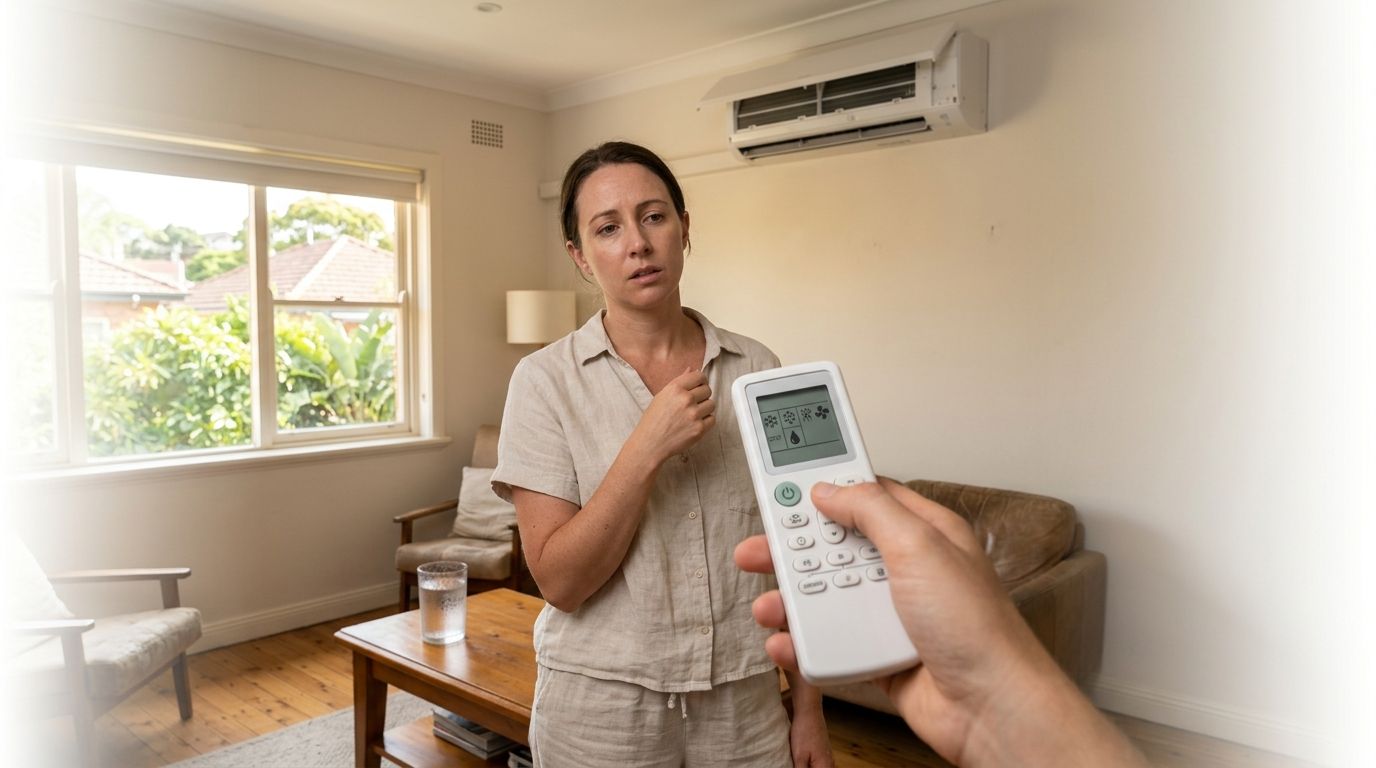
It's a Tuesday morning in Balmain and the temperature is only 24°C, but the air inside feels thick and clammy. Your clothes stick to you, the windows are fogged and the house smells faintly musty. This is Sydney humidity at its worst, and it's exactly the situation the air conditioner dehumidifier setting was designed for. Most modern split systems include a dedicated 'dry' mode, usually shown as a water droplet symbol on the remote.
Dry mode is not the same as cooling mode. Rather than aggressively dropping the room temperature, it focuses on pulling excess moisture out of the air while keeping the temperature relatively stable. The result is air that feels fresher and more comfortable without the chill of full cooling.
Key takeaways
- Dry mode uses the air conditioner dehumidifier setting to remove moisture without significant temperature drops.
- It runs the compressor at lower speed, using less energy than cooling mode on mild days.
- Best used when humidity is high but temperature is comfortable, typically in Sydney spring and autumn.
How Does Dry Mode Actually Work?
Dry mode removes humidity by drawing warm, moist indoor air across the unit's evaporator coil. The coil chills the air below its dew point, which causes water vapour to condense into liquid droplets. Those droplets drain away through the unit's condensate line, and the now-drier air is gently reheated before being returned to the room. The temperature barely shifts, but the relative humidity drops noticeably.
The key difference from cooling mode is compressor behaviour. In dry mode, the compressor runs at a lower, steadier speed and cycles on and off more gently rather than running flat out to hit a target temperature. This is why dry mode typically draws less electricity than cooling mode over the same period.
Most systems aim to hold indoor relative humidity between 40% and 60%. That range is widely recommended for both comfort and air quality. Below 40% the air feels dry and irritating; above 60% you're in the territory where mould, dust mites and that familiar Sydney mustiness start to take hold.
Inverter-driven units handle dry mode particularly well because their compressors can modulate speed precisely rather than switching between full-on and full-off. A unit like the Daikin Cora series (for example the FTXM25Y, 2.5kW, installed from around $1,400 to $1,800) is a popular choice across Sydney's Inner West for exactly this reason. Its dry mode is clearly labelled on the remote and the inverter compressor holds humidity levels steadily without overcooling the room. For more on how inverter compressors work, see our guide to inverter technology in air conditioners.
Dry Mode vs Cooling Mode: What's the Difference?
The table below shows how the two modes compare across the factors that matter most for everyday use.
| Mode | Primary Goal | Temperature Change | Humidity Reduction | Typical Energy Use | Best Conditions |
|---|---|---|---|---|---|
| Dry Mode | Remove excess moisture from the air | Minimal (1°C to 2°C drop at most) | Strong, targeted | Lower (compressor runs at reduced, steady speed) | Mild but humid days (20°C to 26°C), Sydney spring and autumn mornings |
| Cooling Mode | Lower room temperature to a set point | Significant (can drop 6°C to 10°C or more) | Moderate (as a by-product of cooling) | Higher (compressor runs harder to hit target temp) | Hot days above 28°C where temperature relief is the priority |
The practical takeaway is straightforward. If you're hot, use cooling mode. If you're comfortable temperature-wise but the air feels heavy and sticky, dry mode is the right call. Cooling mode does reduce humidity as a side effect, but it does so by running the compressor hard and dropping the temperature, which can leave a room feeling cold and still slightly clammy once the unit cycles off. Dry mode targets the moisture directly. If you're unsure which symbol on your remote corresponds to which mode, our article on Daikin air conditioner symbols explained is a useful reference for decoding the icons.
When Should You Use the Dehumidifier Setting on Your Air Conditioner?
Dry mode is most useful on days when the air feels uncomfortable but the temperature itself is not the problem. For Sydney homeowners, that covers a surprisingly wide range of situations: mild spring and autumn days where humidity lingers, the hours after heavy rain and overnight in coastal suburbs where sea air keeps moisture levels elevated well into the evening. The target to aim for is 40 to 60% relative humidity indoors, and a basic hygrometer (available at most hardware stores for under $20) makes it easy to know when dry mode is actually needed.
Here are the most common scenarios where dry mode is the right call:
- Humid but mild days in spring and autumn. Sydney's shoulder seasons regularly deliver temperatures in the low to mid 20s with relative humidity above 70%. The room does not need cooling, but the air feels sticky and close. Dry mode handles this without overcooling the space.
- After rain. A heavy downpour pulls moisture into the house through open windows, gaps in older homes and natural air movement. Indoor humidity can spike quickly after rain, and dry mode brings it back down within an hour or two.
- Overnight in coastal suburbs. Residents of Mosman, Neutral Bay and Manly know the feeling: the evening cools down but the air stays damp. Running dry mode overnight keeps bedrooms comfortable without the chill of full cooling.
- Rooms prone to condensation. Bathrooms adjacent to living areas and older Federation homes in Wahroonga with limited cross-ventilation tend to trap moisture. Dry mode helps manage this without the noise and energy draw of running a full cooling cycle.
- Reducing musty odours and mould risk. Mould spores thrive above 60% relative humidity. Running dry mode regularly in problem rooms discourages growth on walls and ceilings and keeps that familiar Sydney mustiness from taking hold.
The Mitsubishi Electric MSZ-AP series (for example the MSZ-AP25VGD, 2.5kW, installed from around $1,500 to $1,900) is a unit commonly fitted in North Shore apartments and Inner West terraces. Its dry mode is activated via the water droplet icon on the remote, and the system holds humidity levels steadily without significant temperature swings, which makes it well suited to the overnight and shoulder-season scenarios above.
When NOT to Use Dry Mode
Dry mode is the wrong choice in three clear situations, and using it at the wrong time can leave you uncomfortable or waste energy.
On very hot days above 30°C, the room needs active temperature reduction, not just dehumidification. Dry mode's compressor runs at a reduced speed and will not bring the temperature down meaningfully. Switch to cooling mode and let the unit do its job properly.
If indoor humidity is already below 40%, removing more moisture will make things worse. Overly dry air causes dry skin, irritated sinuses and static electricity. If your hygrometer reads below 40%, turn the unit off or switch to fan-only mode.
In winter, dry mode provides no heating whatsoever. It will circulate cool, drier air into an already cold room. Use your unit's heating mode instead, which on a reverse-cycle system is also the most energy-efficient way to heat a Sydney home.
Benefits of Using Dry Mode Regularly in a Sydney Home
For Sydney homeowners, dry mode is one of the most underused settings on a split system. Used on the right days, it delivers four practical benefits that go beyond simple comfort, and Sydney's climate makes each of them genuinely relevant rather than theoretical.
Improved comfort on humid days. Humidity affects how hot we feel far more than most people realise. At 26°C with 80% relative humidity, a room feels oppressively warm and sticky. At 26°C with 50% relative humidity, the same temperature feels pleasant. Dry mode achieves that shift without dropping the thermostat, which means no cold feet, no reaching for a jumper and no arguments about the temperature setting.
Better air quality for allergy sufferers. Dust mites and mould spores both thrive in humid conditions. Dust mites reproduce rapidly above 50% relative humidity, and mould can begin colonising surfaces above 60%. Running dry mode regularly keeps indoor humidity in the 40 to 60% range, which meaningfully reduces the conditions these allergens need to flourish. For households with asthma or hay fever, this is a practical and low-effort way to improve the air they breathe every day.
Protection for the home itself. Excess moisture is hard on building materials and furnishings. Timber floors cup and warp, cabinetry joints swell and loosen, and electronics corrode faster in persistently humid environments. This is a real concern in older Inner West terraces and Federation homes, where original timber joinery and floorboards are both valuable and vulnerable. Keeping humidity in check with dry mode is a simple form of preventive maintenance.
Lower running costs on mild days. Because dry mode runs the compressor at a reduced, steadier speed compared to full cooling mode, it draws less power over the same period. On a mild but humid Sydney day where you do not actually need the room cooled, choosing dry mode over cooling mode can reduce your electricity consumption noticeably. For homeowners who want to understand how to get the most efficiency from their system year-round, our guide to energy efficient air conditioners covers the full picture, from mode selection through to star ratings and inverter technology.
Sydney's average relative humidity regularly exceeds 70% through summer and stays elevated well into autumn. That makes dry mode a genuinely useful part of the weekly routine for most households, not just an occasional novelty buried in the remote's menu.
Frequently Asked Questions About the Air Conditioner Dehumidifier Setting
Does dry mode on an air conditioner actually remove humidity?
Yes, dry mode genuinely removes humidity from the air. The unit draws warm, moist air across its evaporator coil, condenses the water vapour into liquid and drains it away through the condensate line. On a humid Sydney day, you can expect indoor relative humidity to drop by 10 to 20 percentage points within an hour or two of running dry mode.
Is it cheaper to run dry mode or cooling mode?
Dry mode is generally cheaper to run than cooling mode because the compressor operates at a lower, steadier speed rather than working hard to hit a target temperature. On a mild but humid day where you do not actually need the room cooled, choosing dry mode can reduce your electricity consumption noticeably. The saving is most meaningful in Sydney's spring and autumn, when temperatures sit in the low to mid 20s and cooling is unnecessary.
How do I set my AC to dehumidify?
Press the 'mode' button on your remote until the water droplet symbol is selected. On Daikin units like the Cora series, the symbol is clearly labelled 'Dry' on the remote display. Mitsubishi Electric systems use the same water droplet icon, and Fujitsu ASTG series remotes follow the same convention. Once selected, the unit manages the process automatically and you do not need to set a separate humidity level.
Can I use dry mode overnight?
Dry mode is well suited to overnight use, particularly in coastal Sydney suburbs where sea air keeps humidity elevated after the temperature drops. Because the compressor runs at a reduced speed, the unit is quieter than in cooling mode and the room stays at a comfortable temperature rather than becoming cold. Set a timer if you want the unit to switch off after a few hours once humidity has stabilised.
Get the Most From Your Air Conditioner With AirFlow Australia
The air conditioner dehumidifier setting is one of the most underused features on a modern split system air conditioning unit. For Sydney homeowners dealing with the city's humid spring and summer months, dry mode can meaningfully improve comfort, protect the home and reduce running costs, all without overcooling the room.
Getting the most from any mode depends on having a well-maintained, correctly sized unit. A system that is overdue for a service or was installed at the wrong capacity will struggle to manage humidity effectively regardless of which mode you select.
AirFlow Australia services homes across the North Shore and Inner West, including Mosman, Chatswood and Newtown. If you'd like expert advice on your split system or want to book a service, call us on 0423 535 905. We're happy to help you get more from the system you already have.