
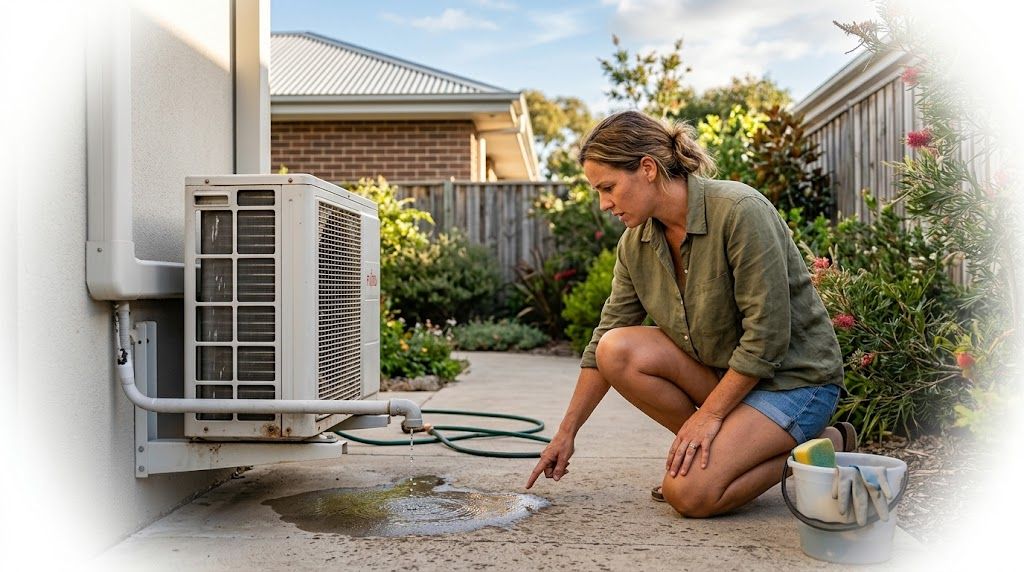
Why Your Air Conditioner Is Leaking Water
You're in the middle of a January heatwave in Sydney, the split system has been running flat out all day, and you notice a puddle spreading across the floor beneath your indoor unit. An air conditioning water leak is one of the most common calls we receive over summer, and the good news is that the cause is often straightforward to identify. Some issues are simple DIY fixes you can sort out in 10 minutes. Others need a licensed technician before they cause real damage to your walls, ceiling or flooring.
In this article we cover the six most common causes of a leaking air conditioner: a blocked condensate drain line, dirty air filters, a damaged drain pan, a frozen evaporator coil, a faulty condensate pump and low refrigerant. Knowing which one you're dealing with will help you decide whether to grab a cloth and a torch or pick up the phone.
Key takeaways
- An air conditioning water leak usually stems from a blocked drain line, dirty filters or frozen coil
- Many causes can be fixed yourself, but refrigerant and drain pan issues require a licensed technician
- Regular filter cleaning and annual servicing prevent most leaks from occurring
6 Common Causes of an Air Conditioning Water Leak
Blocked Condensate Drain Line
A blocked condensate drain line is the single most common cause of an air conditioning water leak we see in Sydney homes. As your air conditioner runs, it pulls moisture from the air and channels that condensate water through a small drain line to the outside of your home. Over time, dust, mould and debris accumulate inside the line and restrict or completely block the flow. Water backs up, fills the drip tray and eventually overflows onto your ceiling or floor.
Split systems in Sydney's humid summers produce a significant volume of condensate, so even a partial blockage can cause a visible leak within hours. The tell-tale sign is water dripping from the front or bottom of the indoor unit while the system is running normally. If you can locate the drain line outlet outside, check whether water is flowing from it. No flow during operation almost always points to a blockage.
Dirty or Clogged Air Filters
Dirty air filters restrict the airflow across your evaporator coil. Without enough warm air moving over it, the coil drops below freezing, causing excess moisture in the air to freeze on its surface rather than drain away as liquid condensate. When the unit cycles off or the ice builds up enough to block airflow entirely, that ice melts rapidly and produces far more water than the drain pan can handle.
Filters should be cleaned every four to six weeks during heavy-use periods, which in Sydney means most of summer and the cooler months when heating is running. Cleaning them yourself takes about five minutes: slide the filters out, rinse under a tap, let them dry fully and slide them back in. If you'd prefer a professional to handle a full system clean at the same time, our air conditioning cleaning service covers filters, coils and the drain line in one visit.
Damaged or Cracked Drain Pan
The drain pan sits directly beneath the indoor unit and catches all the condensate before it flows into the drain line. In older units, particularly those installed in Federation homes in Wahroonga or Balmain terraces, the drain pan can corrode, crack or warp over years of exposure to moisture. Once the pan is compromised, water escapes before it ever reaches the drain line and drips straight down into your ceiling cavity or onto the wall.
You can sometimes spot a cracked drain pan by shining a torch up at the indoor unit while it's running and looking for water tracking down the outside of the unit casing rather than dripping from the drain outlet. Replacing a drain pan is a job for a technician, as accessing it properly requires partially dismantling the indoor unit.
Frozen Evaporator Coil
A frozen evaporator coil produces a large volume of meltwater in a short period, which is more than most drain pans are designed to handle at once. The coil freezes when airflow is severely restricted, usually from dirty filters or a blocked return air grille, or when refrigerant levels are low, causing the coil pressure to drop below the point where it can absorb heat normally. The system may appear to be running, but cooling output drops noticeably.
The clearest visual sign is ice visible on the indoor unit itself or on the copper refrigerant lines running between the indoor and outdoor units. If you see ice, turn the system off and let it thaw completely before running it again. Address the underlying cause before restarting, otherwise the coil will freeze again and the leak will return.
Faulty Condensate Pump
Not every installation can rely on gravity to move condensate water to a drain. In apartments in North Sydney or Chatswood where the indoor unit sits below the nearest drain point, a small condensate pump is installed to push the water upward and away. These pumps are reliable but not indestructible. When the pump motor fails, the float switch sticks or the outlet tube becomes blocked, water backs up in the collection reservoir and overflows.
A faulty condensate pump is not a DIY repair. The pump needs to be tested, and in many cases replaced, by a technician who can also check that the new unit is correctly sized for the condensate volume your system produces. If your system has a pump and you notice the leak is coming from the pump housing rather than the indoor unit itself, that's a strong indicator the pump is the culprit.
Low Refrigerant
Low refrigerant causes the pressure inside the evaporator coil to drop, which lowers the coil temperature below freezing. The result is the same as a frozen coil from restricted airflow: ice forms on the coil, and when the system cycles off, that ice melts and overwhelms the drain pan. Unlike a dirty filter, you cannot fix a refrigerant issue yourself. Refrigerant handling in Australia requires an Arctick-licensed technician, and topping up a system without finding and repairing the leak first is both ineffective and illegal.
Modern systems like the Daikin Cora and Alira series use R32 refrigerant, which requires specific handling procedures and equipment. If your system is leaking refrigerant, you may also notice reduced cooling performance, a hissing sound near the indoor or outdoor unit, or ice on the refrigerant lines. Turn the system off and call a licensed technician rather than running it further, as operating a system with low refrigerant can damage the compressor.
What You Can Fix Yourself vs. What Needs a Technician
Not every air conditioning water leak requires a service call. Some causes are straightforward to address yourself with basic tools and a bit of time, while others involve licensed work that is illegal to attempt without the right credentials. The table below breaks down the most common leak causes so you know exactly where the line sits.
IssueDIY Fix?What to DoDirty or clogged air filtersYesRemove filters, rinse under a tap, dry fully and reinstall. See our guide to cleaning your air conditioner for step-by-step detail.Mildly blocked condensate drain lineYes, with cautionUse a wet/dry vacuum over the drain outlet to draw out the blockage. If the blockage doesn't clear within a couple of attempts, stop and call a technician to avoid pushing debris further into the line.Frozen evaporator coilTemporary fix onlyTurn the system off and let the coil thaw completely, which typically takes two to four hours. Clean the filters before restarting. If the coil freezes again, the underlying cause needs professional diagnosis.Cracked or damaged drain panNoAccessing and replacing the drain pan requires partial disassembly of the indoor unit. Book a technician.Faulty condensate pumpNoThe pump needs to be tested and correctly sized before replacement. A technician will also check the float switch and outlet tube.Low refrigerantNo. Licensed technician onlyRefrigerant handling requires an Arctick-licensed technician by law. Turn the system off and call a pro immediately.
Attempting refrigerant work or any electrical repairs without the appropriate licence is illegal under Australian law and will void the manufacturer warranty on brands including Daikin, Fujitsu and Mitsubishi Electric. For drain pan replacements, pump repairs or anything involving refrigerant, our air conditioning repairs team can diagnose and fix the fault correctly the first time. Repair costs vary depending on the fault type and parts required. For a breakdown of what to expect to pay, our article on how much it costs to service an air conditioner covers typical price ranges across common repair jobs.
How to Prevent an Air Conditioning Water Leak
Preventing an air conditioner water leak comes down to two things: regular filter cleaning and annual professional servicing. Most leaks we attend in Sydney homes are entirely avoidable with a basic maintenance routine, and the cost of prevention is a fraction of what water damage to a ceiling or wall will set you back.
Here are four practical steps Sydney homeowners can take to keep their system running dry:
- Clean your filters every four to six weeks during summer. Sydney's humid summers push split systems hard, and filters clog faster than most people expect. A blocked filter is the most common trigger for both frozen coils and drain pan overflow. Set a reminder on your phone at the start of October and clean them through to March.
- Book an annual professional service. A qualified technician will flush the condensate drain line, inspect the drain pan for cracks or corrosion, check refrigerant pressure and clean the coil. This single visit catches the issues that DIY cleaning misses and keeps your warranty intact.
- Keep the outdoor unit clear of debris. Leaves, dirt and garden growth around the outdoor unit restrict airflow and can affect refrigerant pressure over time. Clear a 500mm gap around the unit and check it after storms or heavy winds.
- Book a deep clean if the system hasn't been serviced in over 12 months. Mould and biofilm build up inside the indoor unit and drain line faster than most homeowners realise, particularly in older homes in the Inner West. A deep clean flushes the drain line, sanitises the coil and removes the debris that a standard filter rinse won't touch.
AirFlow Australia's servicing team covers the Inner West and North Shore, including suburbs like Balmain, Leichhardt, Mosman, Chatswood and Neutral Bay. If your system is overdue for a service or you've noticed the early signs of a leak, give us a call on 0423 535 905 to book a time that suits you.
Stop the Leak Before It Becomes a Bigger Problem
Most air conditioner water leaks trace back to a handful of preventable causes: a blocked drain line, dirty filters, a cracked drain pan, a frozen coil, a faulty condensate pump or low refrigerant. Catching any one of these early costs far less than repairing water damage to a ceiling, wall or timber floor, and in most cases a single service visit is all it takes to resolve the problem completely.
AirFlow Australia is fully licensed and Arctick registered, with a five-year installation warranty and same-day repairs available across Sydney. Our team services homes throughout the Inner West and North Shore, covering suburbs from Balmain and Leichhardt through to Mosman, Chatswood and Neutral Bay.
If your system is dripping, icing up or just hasn't been serviced in the past 12 months, call us on 0423 535 905 or book an air conditioning service inspection online. A quick check now can save you a costly repair later.
Frequently Asked Questions
What do I do if my aircon is leaking water?
If your aircon is leaking water, turn the unit off immediately to prevent further water damage and stop ice from building up on the coil. Check the air filter first as a blocked filter is one of the most common causes, then inspect the drain tray for overflow or blockage. If neither is obviously the problem, call a licensed technician rather than leaving the unit running.
Can I still use my AC if it's leaking water?
You should turn your AC off until the cause of the leak is identified. Running a leaking unit risks water damage to walls and ceilings, mould growth behind the unit, and if the cause is a frozen coil or low refrigerant, serious damage to the compressor. Book a repair promptly rather than hoping the problem resolves on its own.
What is the 3 minute rule for air conditioners?
The 3-minute rule means waiting at least three minutes after turning an air conditioner off before restarting it. This pause allows refrigerant pressure to equalise, protecting the compressor from starting under high pressure which can cause damage or trigger a fault code. The rule is especially relevant after a power outage or when troubleshooting a water leak.
Can I sleep in my house with a refrigerant leak?
A significant refrigerant leak is a health and safety risk, and you should ventilate the space and avoid prolonged exposure. Modern refrigerants like R32 and R410A used in Daikin, Fujitsu and Mitsubishi Electric systems are not acutely toxic in small amounts, but they can displace oxygen in enclosed spaces. Turn the unit off, open windows and contact an Arctick-licensed technician before using the system again.