
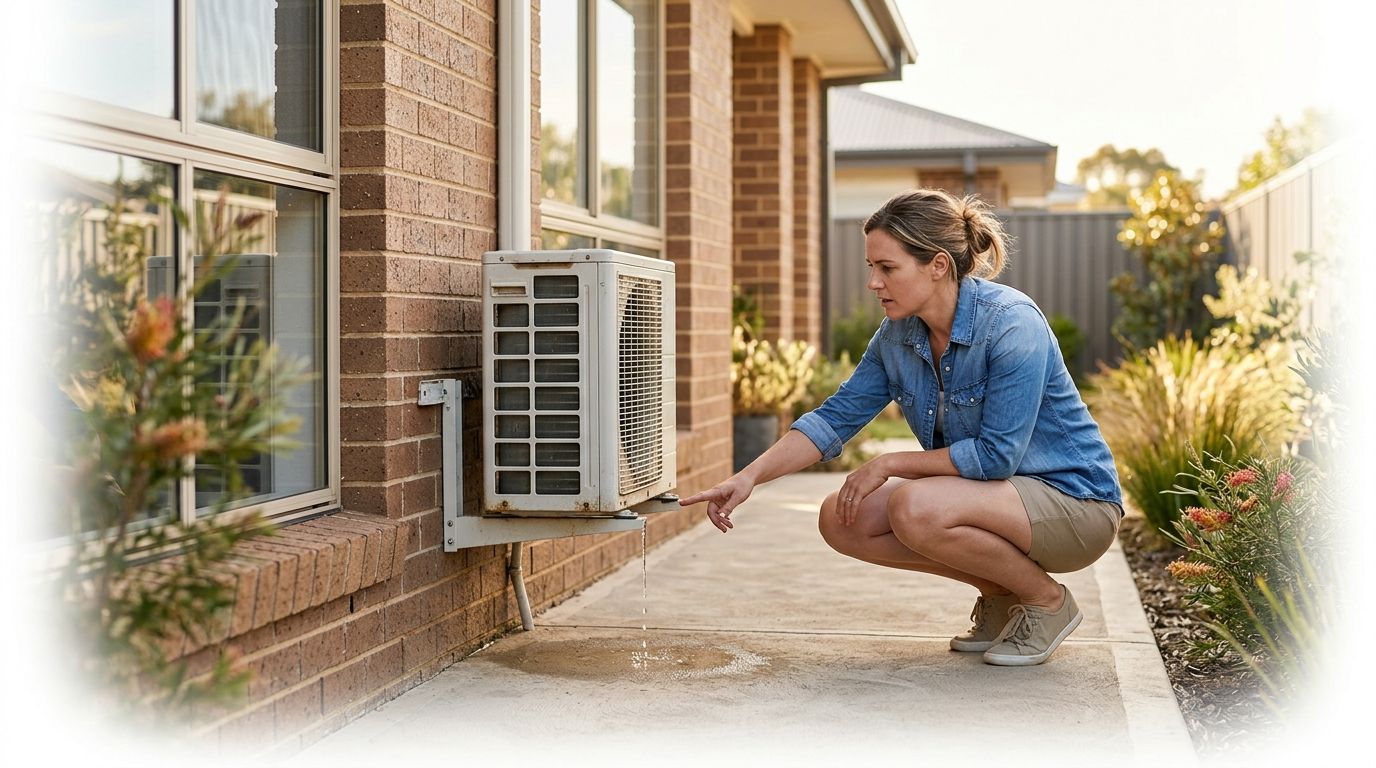
Why Is Your Aircon Water Dripping Indoors?
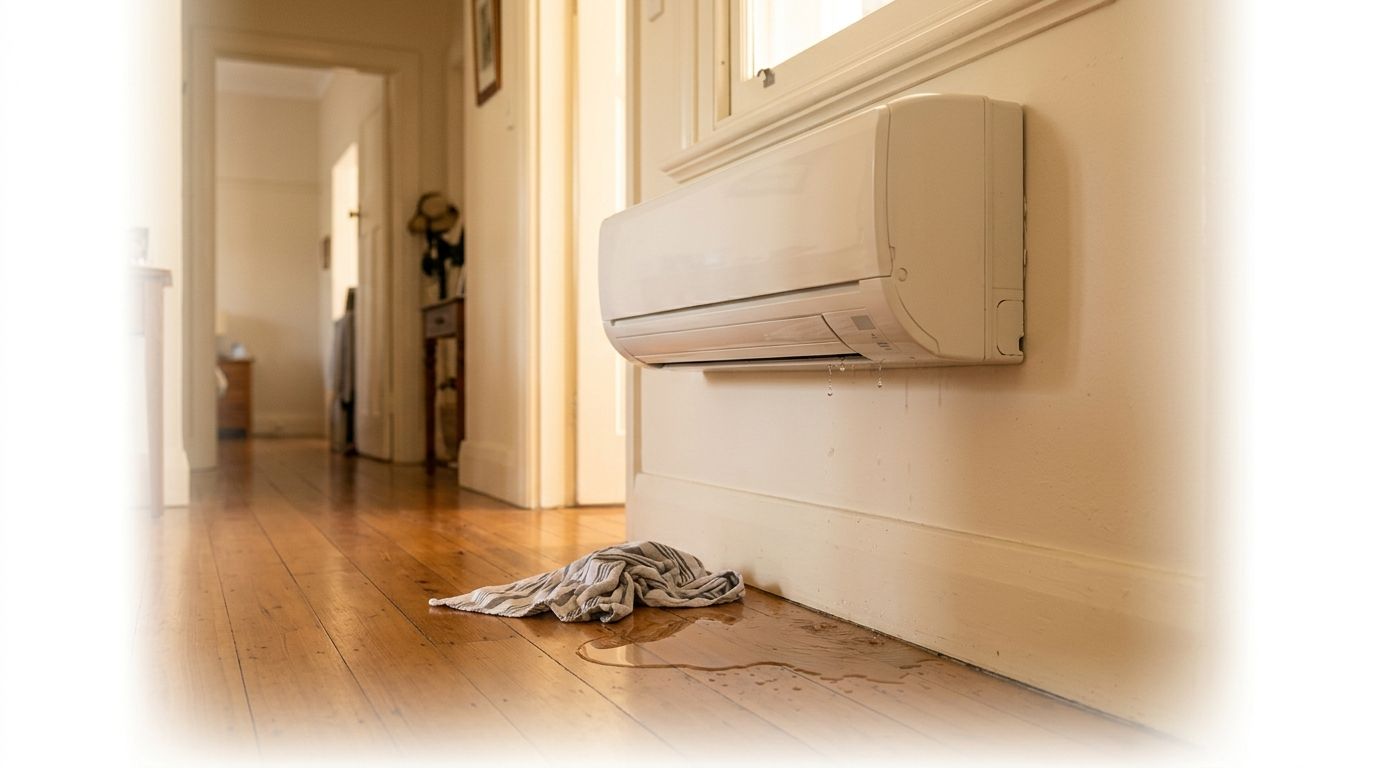
On a humid Sydney afternoon in Balmain or North Sydney, the last thing you want to find is a puddle forming beneath your indoor air conditioning unit. Aircon water dripping is one of the most common complaints we hear from Sydney homeowners over summer, and while a small amount of condensation is a completely normal part of how a split system works, visible dripping or pooling water on your floor is a clear sign something has gone wrong. Left unchecked, it can damage walls, flooring and the unit itself.
The good news is that most causes are straightforward to fix. This article covers the four most common reasons your aircon is dripping water indoors, how to tell which one you are dealing with, and when it makes sense to call a professional rather than attempt a fix yourself.
Key takeaways
- Aircon water dripping indoors is usually caused by a blocked condensate drain line, frozen coils, incorrect installation or a damaged drain pan.
- Most causes can be prevented with regular filter cleaning and annual professional maintenance.
- Refrigerant work requires a licensed Arctick technician and is illegal to attempt yourself.
The Four Most Common Causes of Aircon Water Dripping
Aircon water dripping indoors almost always comes down to one of four problems: a blocked condensate drain line, dirty or frozen evaporator coils, an incorrectly installed or tilted indoor unit, or a damaged drain pan. Each has a different fix and a different level of urgency.
Blocked or Clogged Condensate Drain Line
As your air conditioner cools the air, it pulls moisture out of it. That moisture collects as condensation on the evaporator coil and drips into a drain pan, where it flows out of your home through a condensate drain line. This is the single most common cause of aircon water dripping indoors, and it happens when that drain line becomes blocked.
Over time, dust, mould, algae and debris accumulate inside the drain line. Sydney's humid summers accelerate this process considerably, particularly in older Inner West terraces where airflow around the unit can be limited. Once the line is fully or partially blocked, water backs up into the drain pan and eventually overflows onto your ceiling or wall.
The fix is straightforward. A regular annual service includes clearing and flushing the condensate drain line, which takes a technician only a few minutes. If you are already seeing water on the floor, book a service sooner rather than later to avoid water damage to your home.
Dirty or Frozen Evaporator Coils
If your air filters are clogged with dust, airflow over the evaporator coil drops significantly. Without enough warm air passing over it, the coil temperature falls below freezing and ice begins to form on the coil surface. When the unit cycles off or the thermostat is satisfied, that ice melts rapidly and produces far more water than the drain pan can handle, causing it to overflow.
Dirty filters are the most common trigger, but low refrigerant can also cause the coil to freeze. Refrigerant diagnosis and regassing must be carried out by a licensed, Arctick-registered technician. It is not a DIY job and attempting it without the correct licence is illegal in Australia. Some modern units help reduce the risk of coil icing through built-in self-cleaning functions. The Mitsubishi Electric MSZ-AP Series, for example, includes an auto-clean feature that periodically dries the coil and reduces dust build-up, lowering the chance of restricted airflow over time.
If you suspect frozen coils, turn the unit off and let it thaw completely before running it again. Check and clean your filters first. For anything beyond a filter clean, our air conditioning repairs team can diagnose the fault same-day.
Incorrect Installation or a Tilted Indoor Unit
The indoor unit of a split system must be mounted either perfectly level or with a very slight tilt toward the drain outlet side. This ensures condensate flows naturally toward the drain pan and out through the drain line. If the unit is installed even a few degrees off-level in the wrong direction, water pools at the front of the casing and drips directly onto the floor or wall below.
This is more common than most people realise, particularly after DIY installations or rushed jobs where the bracket was not checked with a spirit level. It can also develop gradually in older North Shore homes where wall movement or settling has shifted the mounting surface over time.
Correcting the tilt usually means remounting the bracket, which is a job for a licensed installer. At AirFlow Australia, every installation comes with a five-year installation warranty, so if your unit was installed by our team and you are seeing this kind of dripping, contact us and we will sort it at no cost to you.
Damaged or Overflowing Drain Pan
The drain pan sits beneath the evaporator coil and collects all the condensation before it exits through the drain line. In units that are 10 or more years old, the pan can develop cracks or corrosion, causing it to leak regardless of whether the drain line is clear. Plastic pans become brittle over time, and metal pans in older systems can rust through entirely.
Even without physical damage, the pan can overflow during periods of very high humidity if the drain line is even partially restricted. Sydney summers regularly push relative humidity above 80%, which means the system is pulling significantly more moisture from the air than it would on a dry day. This is particularly common in Federation and terrace homes across the Inner West and North Shore, where older systems are still running well past their intended service life.
A cracked drain pan needs to be replaced. In some older units, parts availability can be limited, which makes this a good opportunity to assess whether a full system replacement makes more financial sense than an expensive repair on ageing equipment.
What You Can Fix Yourself vs. What Needs a Technician
Not every case of aircon water dripping requires a professional callout. Some causes are genuinely safe for a homeowner to address, while others involve electrical components, refrigerant or structural remounting that must be handled by a licensed technician. The table below gives you a quick way to assess where your situation sits.
DIY Fixes vs. Professional Repairs: A Quick Reference
| You Can Handle This | Call a Technician |
|---|---|
| Cleaning or replacing air filters (every 4-6 weeks during heavy use) | Clearing a severely blocked or inaccessible drain line |
| Wiping down the indoor unit casing with a damp cloth | Repairing or replacing a cracked or corroded drain pan |
| Switching the unit off safely at the wall to prevent further water damage | Regassing refrigerant (Arctick registration required by law) |
| Checking the drain hose for obvious kinks or bends near the outdoor unit | Re-levelling or remounting a misaligned indoor unit |
One area where there is no grey zone is refrigerant. Under Australian law, only technicians holding a current Arctick licence are permitted to handle, recover or regas refrigerant. Attempting this without the correct registration is illegal, carries significant fines and is genuinely dangerous given the pressures involved. If low refrigerant is causing your coils to freeze and your unit to drip, that is not a job to attempt yourself. Booking an annual air conditioning service is the most reliable way to catch drain line blockages before they cause water damage, and a licensed technician will check refrigerant levels as part of that visit.
How to Prevent Aircon Water Dripping in the Future
Preventing aircon water dripping comes down to three consistent habits: keeping filters clean, booking a professional service once a year and making sure your outdoor unit has clear airflow. Sydney's climate makes all three more important than in drier cities, with relative humidity regularly exceeding 80% from December through to March. During those months, your system is extracting significantly more moisture from the air, which puts maximum load on the drain pan and condensate line.
Here is what to build into your routine:
- Clean or replace your filters every 4-6 weeks during heavy use. Clogged filters are the single most preventable cause of coil icing and drain overflow. Most split system filters slide out without tools and can be rinsed under a tap. Let them dry fully before reinserting.
- Book a professional service annually, ideally in October before the Sydney summer peak. A technician will flush the condensate drain line, inspect the coils, check refrigerant levels and confirm the unit is still correctly levelled. This one visit catches the majority of dripping problems before they start.
- Keep the outdoor unit clear of obstructions. Shrubs, garden furniture and debris that restrict airflow around the condenser force the system to work harder, which increases the volume of condensation the drain system has to handle. Aim for at least 50 centimetres of clear space on all sides.
Modern split systems also give you an early warning system built right into the remote. Daikin Cora units such as the FTXM25Y display fault codes on the remote handset when a drainage issue is detected, so you can catch a developing blockage before it becomes a puddle on the floor. The Fujitsu Classic Plus Series, including models like the ASTG09KMCA, similarly flags drainage-related faults through the indoor unit display. If your unit starts dripping and you notice an unfamiliar code on the remote, check your manual or call us before the problem escalates.
For a full seasonal routine, follow our air conditioner maintenance checklist to keep your system running efficiently year-round.
Frequently Asked Questions About Aircon Water Dripping
Why is my air conditioner dripping water inside the house?
Your air conditioner is most likely dripping water inside because the condensate drain line is blocked, the evaporator coils are frozen and thawing, the indoor unit is not level, or the drain pan is cracked. A blocked drain line is the most common cause by far. Turning the unit off and checking your filters is a good first step before calling a technician.
Is it normal for an air conditioner to drip water?
A small amount of condensation on the outdoor unit is completely normal. Water dripping from the indoor unit onto your floor or wall is not normal and should be investigated promptly. Left unattended, even a slow drip can cause water damage to ceilings, walls and flooring within a matter of days.
How do I stop my aircon from dripping water?
Start by cleaning your air filters, as clogged filters are the most preventable cause of dripping. If the filters are clean and the unit is still dripping, switch it off and book a professional service. A technician can flush the drain line, check refrigerant levels and confirm the unit is correctly levelled, which covers the four most common causes in a single visit.
Can I fix a dripping aircon myself?
You can safely clean your filters, wipe down the indoor unit casing and switch the unit off at the wall to prevent further water damage. Anything beyond that, including clearing a blocked drain line, repairing a cracked drain pan or handling refrigerant, requires a licensed technician. Refrigerant work in particular is illegal to perform without a current Arctick registration in Australia.
Still Got a Dripping Aircon? AirFlow Australia Can Help
Aircon water dripping is almost always caused by one of four fixable problems: a blocked drain line, frozen or dirty coils, a tilted indoor unit, or a failing drain pan. But left unattended, any of these can lead to water damage, mould growth and rising energy bills as the system works harder than it should.
If a dirty drain line or grimy coils caused your leak, our air conditioning cleaning service will have your system back to full health. AirFlow Australia is fully licensed, Arctick registered and carries a five-year installation warranty on all our work. We offer same-day repairs across Sydney's Inner West and North Shore, so you are not waiting days for a fix in the middle of summer.
Call us on 0423 535 905 or book online and we will have a technician out to you fast.