

Dry Mode vs Cool Mode: Why the Air Conditioner Dehumidifier Setting Matters
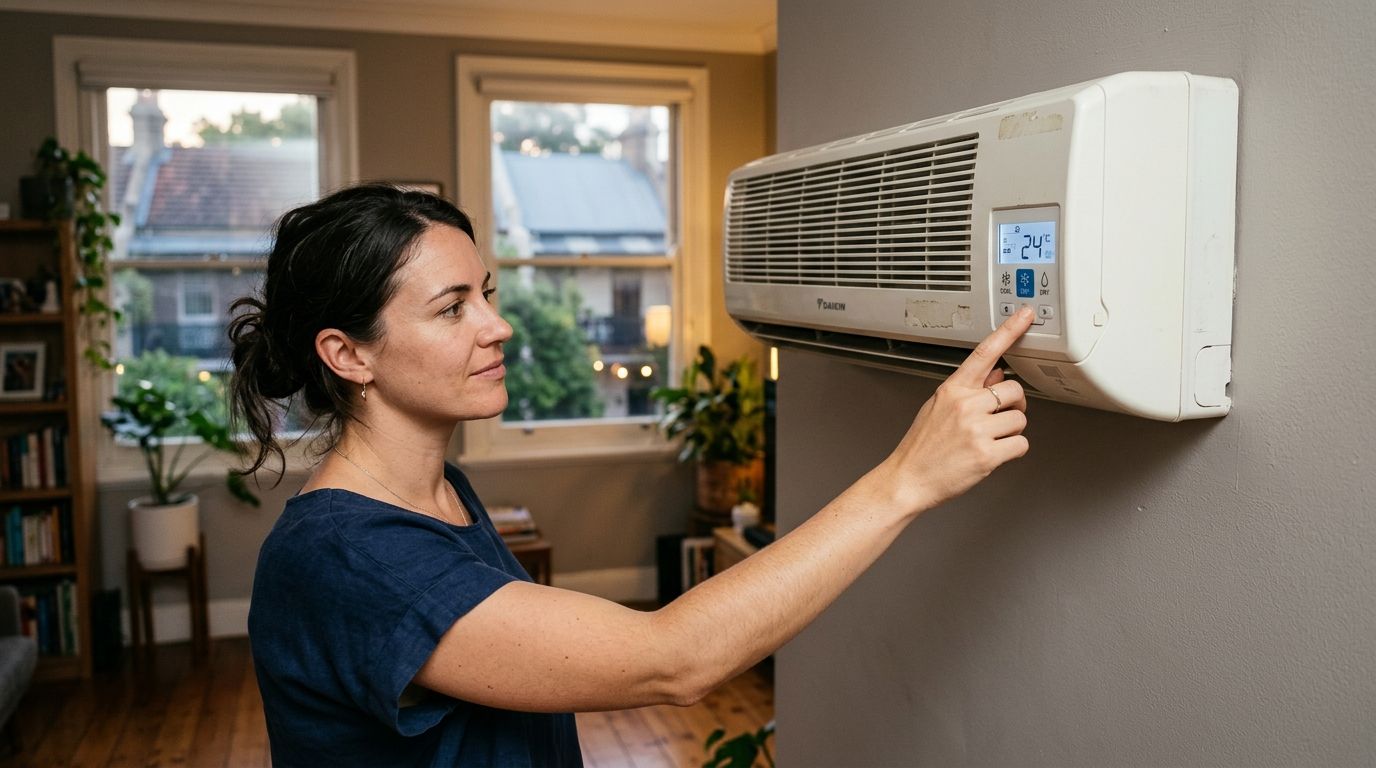
It's 9pm on a late-February evening in Newtown. The thermometer reads 24°C, which sounds manageable, but the air feels like a warm, wet towel draped over the room. You flick on the air conditioner and reach for Cool mode out of habit. But is that actually the right call? Knowing how to use the air conditioner dehumidifier setting correctly can make the difference between genuine comfort and a room that feels cold but still clammy.
Most Sydney homeowners treat their split system as a simple on/off device, cycling between Cool and off without a second thought. The Dry mode button gets ignored entirely. This article will clear that up across three areas: what Cool mode and Dry mode each actually do under the hood, when to reach for each one, and what humidity level you should be targeting for real comfort.
Key takeaways
- The air conditioner dehumidifier setting (Dry mode) removes moisture efficiently on mild, humid days without over-cooling.
- Cool mode prioritises temperature reduction, while Dry mode prioritises humidity removal using the same refrigeration hardware.
- Dry mode typically uses 30 to 50% less electricity than Cool mode on mild days.
What Does Each Mode Actually Do?
Cool mode and Dry mode both use the same refrigeration hardware inside your split system, but they pursue different goals. Cool mode chases a temperature target. Dry mode chases a humidity target. Understanding that single distinction will change how you use your unit on muggy Sydney days.
How Cool Mode Works
In Cool mode, your split system runs a continuous refrigeration cycle. Refrigerant circulates through the indoor unit's evaporator coil, absorbing heat from the warm air drawn across it. The compressor then pumps that heat-laden refrigerant outside, where the condenser coil releases the heat into the outdoor air. The now-cooled air is blown back into your room, and the cycle repeats until the thermostat reaches its target temperature.
Because the compressor runs continuously until that target is hit, Cool mode moves a large volume of air and drops the room temperature quickly. Moisture does condense on the evaporator coil as a by-product, so some dehumidification happens, but it is incidental. Cool mode is most effective when the indoor temperature is above 24°C and your primary problem is heat rather than humidity.
How Dry Mode Works
Dry mode flips the priority. The fan drops to its lowest speed, reducing airflow across the evaporator coil. The compressor cycles on and off in short bursts rather than running continuously. This slower, more controlled process draws moisture out of the air efficiently: warm humid air passes over the cold coil, water vapour condenses and drains away, and the air returned to the room is drier. Because the compressor is not running flat out, the room temperature typically falls only 1 to 2°C rather than several degrees.
That gentle temperature drop is exactly why Dry mode feels so comfortable on mild but sticky days, typically 22 to 26°C with relative humidity above 60%. You are not being blasted with cold air; you are simply having the moisture pulled out, which is what your body actually needs to feel comfortable. Most modern Daikin and Mitsubishi Electric split systems include Dry mode as a standard feature, accessible directly from the remote. Dry mode is not a full substitute for a dedicated standalone dehumidifier in a severely damp space, but for everyday Sydney humidity it does the job well.
Dry Mode vs Cool Mode: A Side-by-Side Comparison
Dry mode and Cool mode use the same refrigeration hardware but operate in fundamentally different ways. Dry mode cycles the compressor on and off at low fan speed to extract moisture, while Cool mode runs the compressor continuously at variable fan speeds to drop the room temperature. Choosing the wrong mode for the conditions wastes energy and leaves you uncomfortable.
| Attribute | Dry Mode | Cool Mode |
|---|---|---|
| Primary Goal | Remove moisture from the air | Lower air temperature |
| Compressor Behaviour | Cycles on and off in short bursts | Runs continuously until target is reached |
| Fan Speed | Fixed at minimum (low) | Variable, adjusts to demand |
| Typical Energy Use | Lower than Cool mode | Higher, especially in peak heat |
| Best Ambient Temperature Range | 18°C to 26°C | 24°C and above |
| Best Humidity Condition | Above 60% relative humidity | Any humidity level |
The practical takeaway is straightforward: reach for Cool mode when the room is genuinely hot and you need the temperature to drop several degrees quickly. Reach for Dry mode when the temperature is tolerable but the air feels thick and clammy. Choosing the right mode for the conditions is one of the simplest ways to get more from your energy efficient air conditioners without spending a cent more on electricity.
Running Cool mode on a mild 23°C day just because the air feels humid is a common mistake. The compressor works harder than necessary, the room often ends up over-cooled, and you end up reaching for a jumper while the humidity problem is only partially addressed. Dry mode handles that scenario with less energy and more precision.
When to Use the Dehumidifier Setting in Sydney
Sydney's coastal climate makes the air conditioner dehumidifier setting genuinely useful for a large part of the year. Relative humidity regularly climbs above 70 to 80% RH during summer, particularly in Inner West suburbs like Leichhardt and Annandale and in North Shore homes close to the harbour. Knowing the specific conditions that call for Dry mode helps you stay comfortable without overcooling or overspending.
Three Scenarios Where Dry Mode Is the Better Choice
- Mild overcast summer days (22°C to 25°C). These are the days that catch people out. The temperature looks fine on paper, but the air feels clammy and oppressive. Cool mode will drop the room to 20°C and leave you cold but still uncomfortable. Dry mode pulls the moisture out without over-cooling, which is exactly what the conditions require.
- After heavy rain. A summer downpour can push indoor humidity up sharply within an hour, especially in older homes with timber floors and limited subfloor ventilation. Running Dry mode for 30 to 60 minutes after rain settles the indoor humidity back to a comfortable 50 to 55% RH without making the room feel like a refrigerator.
- Shoulder seasons: autumn and spring. From March through May and again in September and October, Sydney temperatures often sit in the low-to-mid 20s but humidity stays stubbornly high. It is not hot enough to justify full cooling, but the moisture is real. Dry mode is the right tool for these weeks. For more detail on dialling in the right temperature setting during these periods, the guide on optimal temperature for aircon dry mode covers the specifics.
When Cool Mode Wins
On a 35°C Sydney heatwave day, Dry mode simply cannot keep up. The compressor cycling pattern and low fan speed are designed for moisture removal, not serious heat reduction. Trying to use Dry mode in those conditions will leave the room warm and still humid. Switch to Cool mode, set your target temperature to around 24°C and let the system work as intended.
Homes That Benefit Most
Properties with poor natural ventilation see the biggest gains from regular Dry mode use. Older Federation terraces in Balmain, ground-floor apartments in North Sydney and semi-detached homes in Leichhardt tend to trap humid air, particularly in bedrooms and living areas that face south or have limited cross-ventilation. A compact split system air conditioning unit with a reliable Dry mode, such as the Fujitsu ASTG09KMCA 2.5kW, suits these smaller Inner West apartments well. It is quiet, efficient at low fan speeds and handles the kind of moderate but persistent humidity that characterises Sydney's shoulder seasons without overcooling a compact room.
Does Using Dry Mode Save Energy?
Dry mode typically uses 30 to 50% less electricity than Cool mode because the compressor cycles on and off rather than running continuously. On a mild but humid day, a 2.5kW split system in Cool mode might draw 750 to 900W, while the same unit in Dry mode may draw only 300 to 500W depending on how frequently the compressor cycles. That difference adds up across a Sydney summer.
The key reason for the saving is compressor behaviour. In Cool mode, the compressor runs flat out until the room hits the target temperature. In Dry mode, it fires in short bursts, rests, then fires again. Each burst condenses moisture from the air, and the rest period keeps the overall power draw low. Modern inverter-driven units handle this cycling particularly well. The Daikin Cora 2.5kW (FTXM25WVMA) and the Mitsubishi Electric MSZ-AP25VGD 2.5kW both use variable-speed inverter compressors that modulate output smoothly during Dry mode, rather than the blunter on/off pattern of older fixed-speed models. The result is quieter operation, less wear on the compressor and more consistent humidity control.
That said, Dry mode is not a universal energy saver. On a 35°C day, the room genuinely needs cooling, not just dehumidification. Forcing Dry mode in those conditions means the compressor cycles more frequently and for longer periods trying to keep up with heat load it was never designed to handle. You end up using more energy than you would with Cool mode set to a sensible 24°C, and the room stays warmer and stickier. Use Dry mode when the temperature is already comfortable and humidity is the problem. Use Cool mode when the heat is the problem.
A well-maintained unit also runs both modes more efficiently. Dirty filters restrict airflow across the evaporator coil, forcing the compressor to work harder regardless of which mode you are in. Booking a regular air conditioning service keeps the coil clean, the refrigerant charge correct and the drain line clear, so Dry mode delivers the energy savings it is capable of rather than fighting against a system that is already struggling.
Frequently Asked Questions About the Air Conditioner Dehumidifier Setting
Is Dry mode the same as the dehumidifier setting on an air conditioner?
Yes. Dry mode is the built-in dehumidifier setting on a split system air conditioner. It uses the same evaporator coil as Cool mode but runs the fan at minimum speed and cycles the compressor in short bursts to extract moisture rather than aggressively lower the temperature. The result is drier air with only a small drop in room temperature.
Can I use Dry mode instead of Cool mode in summer?
Only on mild days where the temperature is already comfortable, typically between 22°C and 26°C. If the room is genuinely hot, above 28°C or so, Dry mode cannot shift enough heat to make you comfortable. On those days, Cool mode is the right choice. Dry mode works best when humidity is the primary problem, not heat.
What humidity level should I aim for indoors?
The target range for indoor comfort is 40 to 60% relative humidity. Below 40% the air feels dry and can irritate airways. Above 60% it starts to feel clammy and creates conditions that favour mould growth. In Sydney, Dry mode is most useful when indoor humidity climbs above 65%, which happens regularly during summer and in the shoulder seasons.
Does Dry mode cool the room at all?
Yes, but only slightly. Expect a drop of around 1 to 2°C rather than the 4 to 6°C you might see from Cool mode running for the same period. That small temperature reduction is a side effect of the refrigeration process, not the goal. If you need the room noticeably cooler, switch to Cool mode.
Get the Most Out of Every Mode With a Well-Maintained System
The core rule is simple: reach for Cool mode when the room is genuinely hot and you need the temperature to drop, and reach for Dry mode on mild, sticky days where humidity is the real problem. Getting that choice right costs nothing and makes a noticeable difference to comfort. But neither mode performs well if the unit working behind it is dirty, low on refrigerant or overdue for a service.
Blocked filters choke airflow across the evaporator coil, forcing the compressor to work harder in both modes. A low refrigerant charge reduces the coil's ability to condense moisture effectively, which means Dry mode delivers far less than it should. A clogged drain line can cause water to back up inside the unit rather than drain away. These are not rare edge cases; they are the most common reasons a system that should be comfortable simply is not.
If your split system is not performing the way this article describes, a service inspection is the right next step. The AirFlow Australia team services homes across Sydney's Inner West and North Shore, from Newtown and Balmain through to North Sydney and Mosman. To book a service or ask a question about your system, call us on 0423 535 905. We will make sure your unit is clean, correctly charged and ready to handle whatever Sydney's humidity throws at it.