
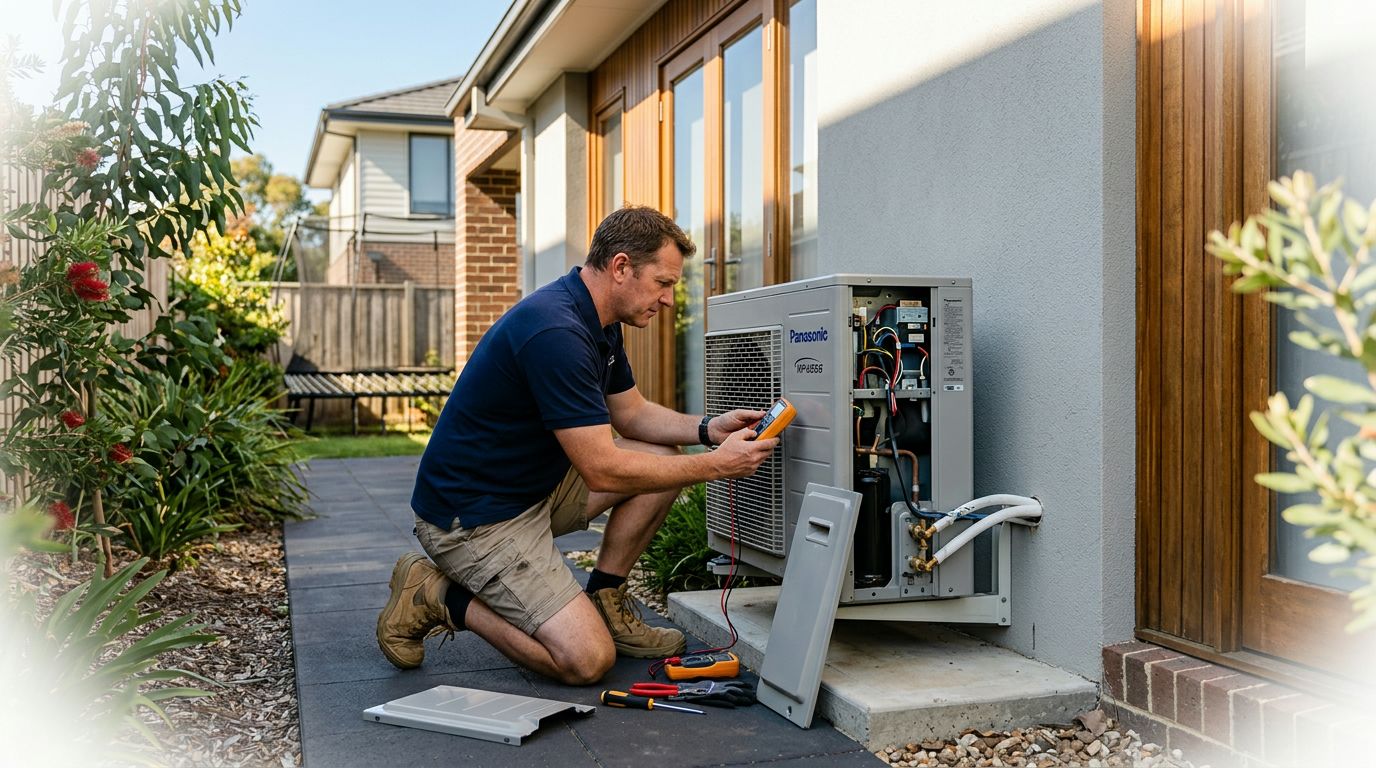
Why Is Your Air Conditioning Unit Not Blowing Cold Air?
You have come home to a sweltering afternoon in Balmain or North Sydney, flicked on the split system, and waited. The unit is running, the fan is spinning, but the room stays stubbornly warm. If your air conditioning unit is not blowing cold air, you are not alone. It is one of the most common calls we receive across Sydney every summer. The good news is that the cause is usually one of five things: a dirty filter, low refrigerant, a frozen evaporator coil, a blocked outdoor unit, or a simple settings error. Some of these you can sort out yourself in minutes. Others require a licensed technician. This article walks you through each cause so you can diagnose the problem quickly and know exactly what to do next.
Key takeaways
- An air conditioning unit not blowing cold air is usually caused by a dirty filter, low refrigerant, frozen coil, blocked outdoor unit or settings error.
- Many causes can be fixed by homeowners in minutes, while refrigerant and electrical issues require a licensed technician.
- Regular filter cleaning and annual professional servicing prevent most cooling failures.
The Most Common Reasons an Air Conditioning Unit Stops Blowing Cold Air
An air conditioning unit that runs but fails to cool is almost always traceable to one of five root causes. Understanding what each one looks like and who can fix it saves you time, money and a very uncomfortable night's sleep.
Dirty or Blocked Air Filter
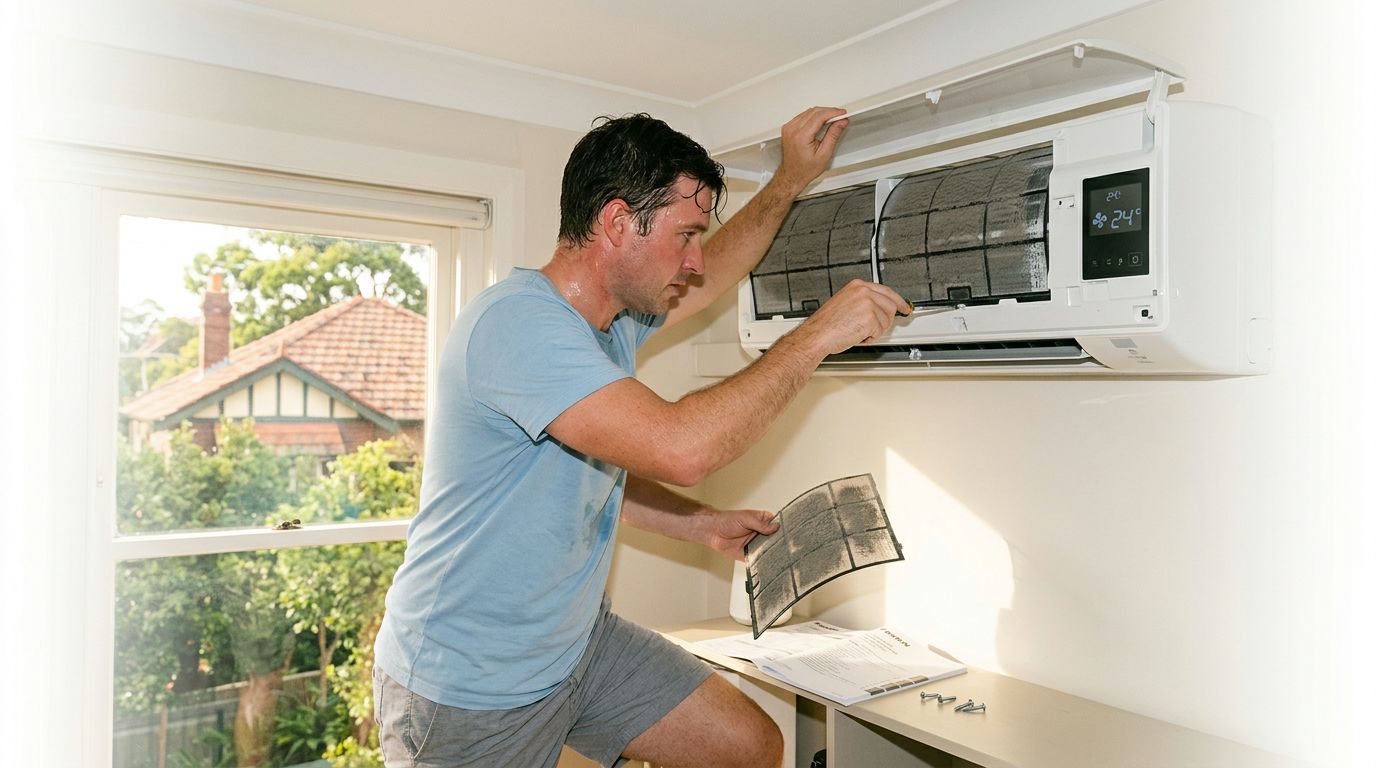
A clogged air filter is the single most common reason a split system loses its cooling punch, and it is also the easiest to fix. The filter sits in the indoor unit and catches dust, pet hair and airborne particles before they reach the evaporator coil. When it becomes blocked, airflow across the coil drops sharply. The coil cannot absorb heat from the room air efficiently, so the system runs continuously but barely cools.
During heavy summer use, filters should be cleaned every four to six weeks. In dusty Inner West homes or households with pets, you may need to clean them more often. Most homeowners can remove, rinse and reinstall the filter themselves in under 10 minutes. For a full walkthrough, see our guide on how to clean your air conditioner filters.
Low or Leaking Refrigerant
Refrigerant is the substance that actually moves heat out of your home. Modern systems use R32 or R410A, which circulate between the indoor and outdoor units at pressures typically ranging from 700 to 1,200 kPa depending on the operating mode. When the refrigerant charge is low, the system cannot transfer heat effectively and cooling capacity drops noticeably.
Refrigerant does not deplete on its own. A low charge almost always means there is a leak somewhere in the system, whether at a joint, valve or the coil itself. This is not a DIY repair under any circumstances. Under the Ozone Protection and Synthetic Greenhouse Gas Management Act, only an Arctick-registered technician can legally handle, recover or recharge refrigerant in Australia. If you suspect a refrigerant leak, switch the system off and call a licensed technician.
Frozen Evaporator Coil
It sounds counterintuitive, but a frozen evaporator coil is a common reason an aircon stops delivering cold air. The coil freezes when airflow is too restricted, often from a dirty filter, or when refrigerant levels are low, causing the coil surface temperature to drop below zero and ice to form. Once the coil is encased in ice, air cannot pass over it properly and cooling stops almost entirely.
If you notice reduced airflow and suspect icing, turn the system off immediately and switch to fan-only mode for one to two hours to thaw the coil. Then check and clean the filter. If the coil freezes again after you restart the system in cool mode, the underlying cause is likely a refrigerant issue and a technician needs to inspect it. Running a frozen system in cool mode can damage the compressor.
Dirty or Blocked Outdoor Condenser Unit
The outdoor unit's job is to expel the heat extracted from inside your home into the outside air. It does this through aluminium fins that need clear airflow to work properly. In Sydney's Inner West and North Shore suburbs, established gardens mean the outdoor unit is often surrounded by leaf litter, seed pods, grass clippings and fine dust that gradually clog the fins and restrict airflow. When heat cannot dissipate, the system's head pressure rises, efficiency drops and cooling output falls.
As a homeowner, you can gently rinse the fins with a garden hose on a low-pressure setting to clear surface debris. Spray from the inside out where possible to push debris away from the coil rather than deeper into it. Avoid high-pressure washers, which can bend the delicate fins. A professional deep clean of the condenser, including coil treatment and fin straightening, is recommended at least once a year before the summer season begins.
Incorrect Mode or Thermostat Settings
Before assuming a fault, check the remote. A surprisingly large number of service calls turn out to be a settings issue. The most common culprits are the unit being left in 'Fan Only' mode, which circulates air but does not activate the refrigeration cycle, 'Dry' mode, which prioritises dehumidification over cooling and runs at reduced capacity, or a set temperature that is actually higher than the current room temperature.
Check that the mode icon on the remote shows a snowflake or 'Cool' symbol, and that the set temperature is at least two to three degrees below the room temperature shown on the display. Also check that the fan speed is not set to its lowest setting, which can make airflow feel negligible even when the system is cooling correctly. If you have just turned the system on after a period of inactivity, note that most modern split systems have a three-minute delay built in before the compressor starts. This is normal and not a fault.
DIY Checks vs When to Call a Professional
Not every cooling problem needs a technician, but some absolutely do. As a general rule, anything that involves refrigerant, live electrical components or internal coil repairs must be handled by a licensed professional. The table below helps you quickly sort which category your problem falls into so you can act without delay.
| You Can Handle This | Call a Technician |
|---|---|
| Cleaning or rinsing the indoor air filter | Refrigerant recharge or leak repair |
| Checking and correcting the mode and thermostat settings on the remote | Recurring frozen evaporator coil (after filter has been cleaned) |
| Clearing leaf litter, grass clippings and debris from around the outdoor unit | Electrical faults, tripped isolators or PCB failures |
| Gently rinsing the outdoor condenser fins with a low-pressure garden hose | Condenser coil deep clean and fin straightening |
| Thawing a frozen coil by switching to fan-only mode for one to two hours | Compressor faults or unusual noises from the outdoor unit |
| Resetting the unit at the isolator switch if the system has locked out | Any fault codes displayed on the indoor unit that persist after a reset |
Refrigerant handling, electrical diagnostics and coil repairs are not DIY territory under any circumstances. Under Australian law, only an Arctick-registered technician can legally handle refrigerants such as R32 and R410A. Attempting these repairs without the correct licence risks personal injury, system damage and a hefty fine. If your problem falls in the right-hand column above, the safest and most cost-effective move is to book a qualified technician promptly. AirFlow Australia offers same-day air conditioning repairs across Sydney, so you are rarely more than a few hours away from a fix.
How to Prevent Your Air Conditioner from Losing Cooling Performance
Keeping your air conditioner blowing cold air reliably through a Sydney summer comes down to three straightforward habits: clean filters, an annual professional service and a clear outdoor unit. Staying on top of these three things dramatically reduces the chance of a breakdown on the hottest day of the year and extends the working life of your system considerably.
Clean Your Filters Every Four to Six Weeks During Peak Season
During summer, your split system is working hard every day. Filters load up with dust, pollen and fine particles faster than most homeowners expect, particularly in homes near parks or with pets. A filter that is cleaned every four to six weeks maintains full airflow across the evaporator coil, which keeps the system running at its rated capacity and prevents the coil from freezing. This single habit eliminates the most common cause of poor cooling performance and costs you nothing but 10 minutes of your time.
Book an Annual Professional Service Before Summer
A professional air conditioning service covers the things you cannot easily check yourself: refrigerant pressure, coil condition, electrical connections, drain line health and overall system efficiency. A standard service from a qualified technician typically costs between $150 and $250 in Sydney, depending on the system type and its condition. That is a small outlay compared to the cost of a compressor replacement or a refrigerant recharge caused by a slow leak that went undetected for a season. For Sydney homes on the North Shore, where established gardens drop leaves and seed pods into outdoor units year-round, an annual service before November is especially worthwhile.
Keep the Outdoor Unit Clear of Vegetation and Debris
The outdoor condenser needs at least 300mm of clear space on all sides to breathe properly. In leafy suburbs like Gordon, St Ives and Wahroonga, it is common to find outdoor units half-buried in overgrown shrubs or clogged with seed pods by mid-summer. Make a habit of checking the unit monthly during the warmer months. Clear any debris from around the base, trim back any vegetation that has crept within 300mm of the unit and give the fins a gentle rinse with a garden hose if they look dusty. These small checks take five minutes and can prevent a costly breakdown mid-heatwave.
If your system is already showing signs of reduced cooling despite clean filters and a clear outdoor unit, it may be time for a deeper look. Our article on 7 signs your split system air conditioner needs a service covers the warning signs that indicate a professional inspection is overdue.
Is It Time to Replace Your Air Conditioning Unit?
If your air conditioner is more than 10 to 12 years old and is repeatedly failing to cool, the honest answer is that repair costs may no longer make financial sense. A system that needs frequent refrigerant top-ups almost certainly has a slow leak that will keep recurring. A failing compressor on an older unit can cost $800 to $1,500 to replace, often more than the system is worth. At that point, replacement is not just the cheaper option over time, it is the smarter one.
Modern inverter split systems are dramatically more efficient than units from a decade ago. Energy star ratings of five to six stars are now standard across entry-level and mid-range models, compared to the two to three stars typical of older fixed-speed systems. That difference translates directly into lower electricity bills every month the system runs.
Three 2.5kW models worth considering for Sydney bedrooms and smaller living areas are a good illustration of what is available. The Daikin Cora (FTKM25YVMA) carries a five-star energy rating and is a solid entry-level choice for bedrooms and compact living spaces. The Fujitsu ASTG09KMCA is a compact, quiet alternative that suits apartments and older Inner West terrace homes particularly well. For North Shore homeowners who prioritise efficiency and near-silent operation, the Mitsubishi Electric MSZ-AP25VGD steps up to a six-star energy rating and includes a weekly timer function, making it the premium pick in this size bracket.
Think of a new system as a 10 to 15 year investment rather than a one-off expense. The running cost savings alone on a six-star unit versus a 12-year-old system can offset a significant portion of the purchase price within a few years. Browse our full range of split system air conditioning options to compare models, capacities and energy ratings side by side.
Frequently Asked Questions
Why is my air conditioner running but not cooling the room?
The most common reasons are a dirty air filter, low refrigerant, a frozen evaporator coil or a blocked outdoor condenser unit. Start by checking and cleaning the filter, then confirm the remote is set to 'Cool' mode with the temperature set below the current room temperature. If the problem persists after those checks, a licensed technician should inspect the system for refrigerant or coil issues.
Can I recharge my air conditioner refrigerant myself?
No. Under Australian law, only an Arctick-registered technician can legally handle, recover or recharge refrigerants such as R32 and R410A. Attempting to do this yourself risks personal injury, system damage and significant fines. If you suspect low refrigerant, switch the system off and book a qualified technician.
How do I know if my air conditioner compressor is failing?
Common signs of a failing compressor include the outdoor unit making loud clicking, grinding or rattling noises, the system running continuously without cooling the room, or the circuit breaker tripping repeatedly when the unit starts. A compressor fault requires a professional diagnosis. On older systems, a failed compressor often makes replacement more cost-effective than repair.
How often should I service my air conditioner?
Most manufacturers and technicians recommend a professional service once a year, ideally before the summer season begins in October or November. In addition to the annual service, homeowners should clean the indoor air filter every four to six weeks during periods of heavy use. Regular maintenance is the single most effective way to prevent cooling failures mid-summer.
Why does my air conditioner smell when I turn it on?
A musty or mouldy smell usually means mould or bacteria has built up on the evaporator coil or in the drain pan, which is common in humid Sydney summers. A stale or dusty smell often clears after the first few minutes of operation and is typically just settled dust burning off. Persistent odours warrant a professional coil clean and drain flush to prevent the problem from worsening.
Get Your Air Conditioner Cooling Again with AirFlow Australia
Most cooling failures come down to a handful of fixable causes: a dirty filter, low refrigerant, a frozen coil, a blocked outdoor unit or a simple settings error. Many of these you can resolve yourself in minutes. Others need a licensed technician, and trying to shortcut those repairs creates more problems than it solves.
AirFlow Australia's team services Sydney's Inner West, North Shore and Upper North Shore, with same-day repairs available for urgent breakdowns, annual servicing packages to keep your system running reliably through summer, and full new system installations when replacement makes more sense than repair.
If your system still is not cooling after working through the checks in this article, we are ready to help. Call us on 0423 535 905 or book a service online and one of our qualified technicians will get your home comfortable again as quickly as possible.