
Is Your Split System Trying to Tell You Something?
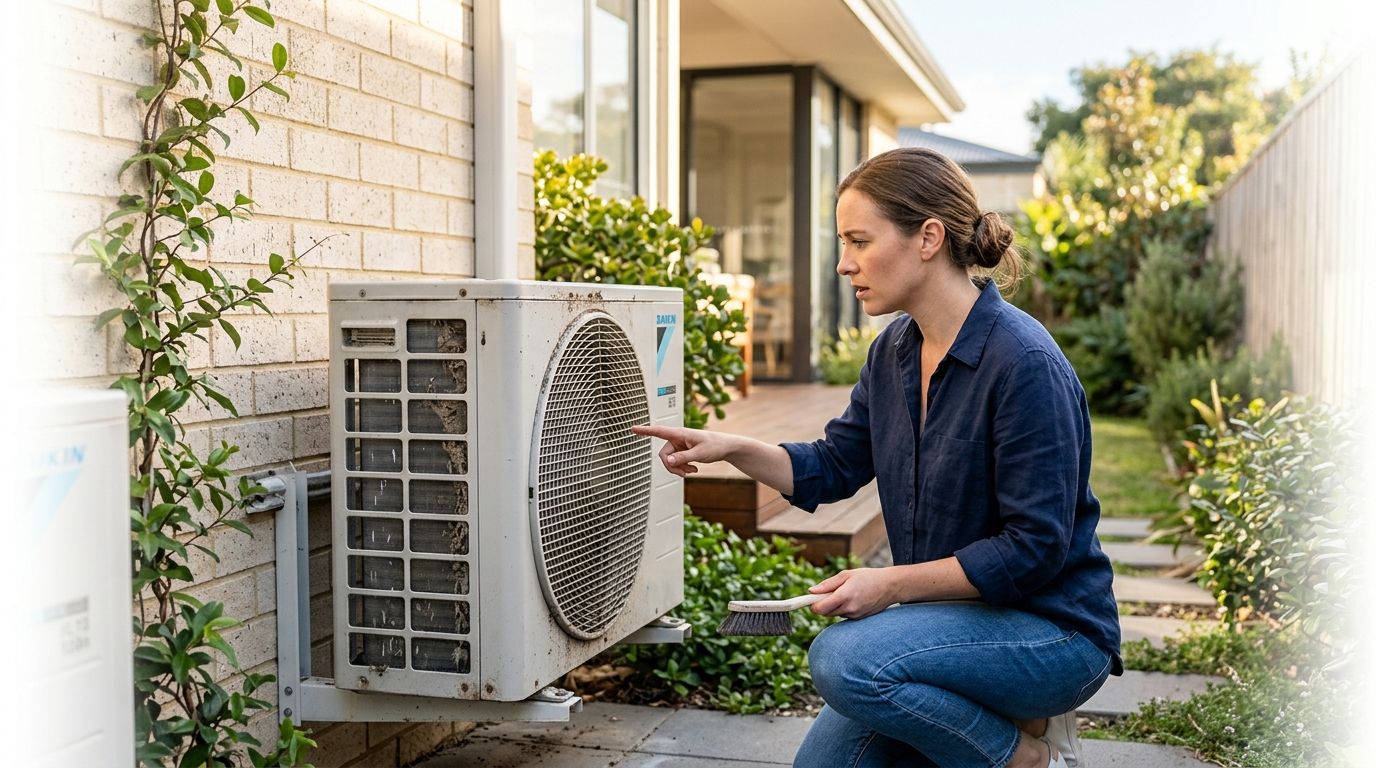
Most split systems don't fail without warning. If you're a North Shore homeowner who noticed your unit struggling to keep up during a January heatwave, blowing lukewarm air or making a noise it never used to, your system was almost certainly flagging a problem well before it gave up entirely. Knowing the signs that your split system needs servicing can save you from a full breakdown on the hottest day of the year.
Split system servicing is one of those tasks that's easy to put off until something goes wrong. But the seven warning signs covered in this article are your system's way of asking for attention before a minor issue becomes a major repair bill. From weak airflow and strange smells to climbing power bills and flashing fault lights, each sign has a cause and a fix.
Catching these problems early typically costs a fraction of what an emergency repair or premature replacement would set you back. A well-maintained split system can last 15 years or more. A neglected one rarely makes it past 10.
Key takeaways
- Split system servicing catches problems early and prevents costly breakdowns.
- Seven warning signs indicate your unit needs professional attention.
- Annual servicing costs $150 to $250 and protects your warranty.
7 Warning Signs Your Split System Needs Servicing
Split systems show seven clear warning signs when they need professional attention: weak or uneven airflow, unusual smells, water leaking from the indoor unit, strange noises, poor heating or cooling performance, unexplained power bill increases and error codes or fault lights. Spotting any one of these early gives you the best chance of a straightforward, affordable fix.
Weak or Uneven Airflow
If your split system is running but the airflow feels noticeably weaker than it used to, or one side of the room stays warm while the other cools down, the system is telling you something is restricting it. The most common culprits are clogged air filters, a fouled evaporator coil or a fan motor that's starting to fail.
Cleaning your filters every four to six weeks is good practice and something you can do yourself. But if you've cleaned the filters and the airflow is still poor, the problem is likely deeper. A dirty evaporator coil acts like a blanket over the heat exchange surface, forcing the unit to work harder for less output. A failing fan motor won't move air efficiently regardless of how clean the filters are. Both issues require a technician to diagnose and fix properly.
A well-maintained split system should distribute air evenly across the room at a consistent volume. If yours isn't doing that, a service call is the right next step.
Strange Smells Coming from the Indoor Unit
Two smells should prompt immediate action. A musty or mouldy odour is by far the most common complaint AirFlow receives from Sydney homeowners, particularly after a humid summer. It's caused by bacteria and mould growing on the evaporator coil and in the drain pan, both of which stay damp during normal operation. In Sydney's coastal humidity, this build-up can happen surprisingly quickly, even in a unit that's only a year or two old.
A burning smell is a different matter entirely. It can indicate an electrical fault inside the unit, a failing capacitor or an overheating motor. If you notice a burning smell, turn the unit off and don't run it again until a technician has inspected it.
Musty smells won't go away on their own and tend to get worse over time. A professional deep clean of the coil and drain pan is the only reliable fix. For a full breakdown of what causes aircon odours and how to address them, see our article on why your aircon smells and how to fix it.
Water Leaking from the Indoor Unit
A small amount of condensation around the indoor unit during heavy use is normal. Active dripping onto your wall, ceiling or floor is not. The most common cause is a blocked condensate drain line. Over time, algae, dust and debris build up inside the drain, preventing water from flowing out to the exterior. When the drain backs up, water has nowhere to go except back into the unit and eventually out through the front or bottom of the casing.
This is more than just a nuisance. In an Inner West terrace or a North Shore apartment, water damage to plasterboard walls and ceilings can run into thousands of dollars to repair. The irony is that clearing a blocked condensate drain during a routine service costs a fraction of that.
If you notice water pooling below your indoor unit or damp patches appearing on the wall around it, book a service before the damage spreads.
Unusual Noises During Operation
A split system in good condition runs quietly. Any new or worsening noise is worth paying attention to. Rattling usually means a loose panel, a screw that's vibrated free or debris that's found its way into the unit. Grinding or squealing points to worn fan bearings, which will eventually seize if left unaddressed. A clicking sound on startup that continues well past the first few seconds often indicates an electrical relay issue.
None of these sounds resolve on their own. In most cases they worsen progressively, and what starts as a minor bearing issue can develop into a failed fan motor if ignored. If your unit has started making a noise that wasn't there six months ago, that's a clear prompt to book a service rather than wait and see.
The System Is Running But Not Cooling (or Heating) Properly
If your split system is blowing air but it's not reaching the set temperature, or it's taking far longer than it used to, the cause is usually one of three things: low refrigerant, a dirty evaporator or condenser coil, or a compressor that's starting to fail. A 2.5kW unit that used to cool a 20m² bedroom in Balmain within 15 minutes but now takes 45 minutes is working significantly harder than it should be.
Refrigerant doesn't deplete under normal conditions. If your system is low on refrigerant, it means there's a leak somewhere in the system. Topping up refrigerant without finding and fixing the leak is a temporary measure at best. Under Australian regulations, refrigerant handling must be performed by an Arctick-registered technician. This is not a DIY job and it's not something an unregistered operator should be touching.
This is one of the most common complaints AirFlow receives from Sydney homeowners heading into summer. Getting a technician to inspect the system before the hot weather arrives is always the better call.
Your Power Bills Have Increased Unexpectedly
A split system that hasn't been serviced in a while doesn't suddenly stop working. It gradually becomes less efficient, drawing more power to achieve the same result. Dirty coils, clogged filters and low refrigerant all force the compressor to run longer and harder, which shows up directly on your electricity bill.
To put a number on it: a Daikin Cora 2.5kW split system running at reduced efficiency due to a dirty coil and partially blocked filters could add $30 to $60 per quarter to your household electricity bill. Over a year, that's up to $240 in wasted energy, which is close to the cost of a professional service. The maths strongly favour keeping the unit maintained.
If your power bills have crept up and you can't point to a clear reason, your split system is worth investigating. A service that restores the unit to full efficiency typically pays for itself within one to two billing cycles.
The System Is Displaying an Error Code or Fault Light
Modern split systems from Daikin, Fujitsu and Mitsubishi Electric all use onboard diagnostics to communicate faults. Rather than simply stopping, they display an error code on the indoor unit's display panel or trigger a blinking indicator light. These codes are the system's way of telling you exactly what's wrong, if you know how to read them.
Some codes are minor. A Fujitsu ASTG Series split system, for example, may display a fault code that simply indicates the filters need cleaning, something you can resolve yourself in a few minutes. Other codes point to refrigerant pressure faults, thermistor failures or compressor issues that require a licensed technician to diagnose and repair.
The key rule is this: don't ignore a fault light and don't keep running the unit if it's displaying an active error code. Doing so can turn a repairable fault into a failed component. If you have a Daikin unit with a blinking operation light, our article on Daikin fault light causes and fixes walks through the most common codes and what they mean.
What Happens During a Professional Split System Service?
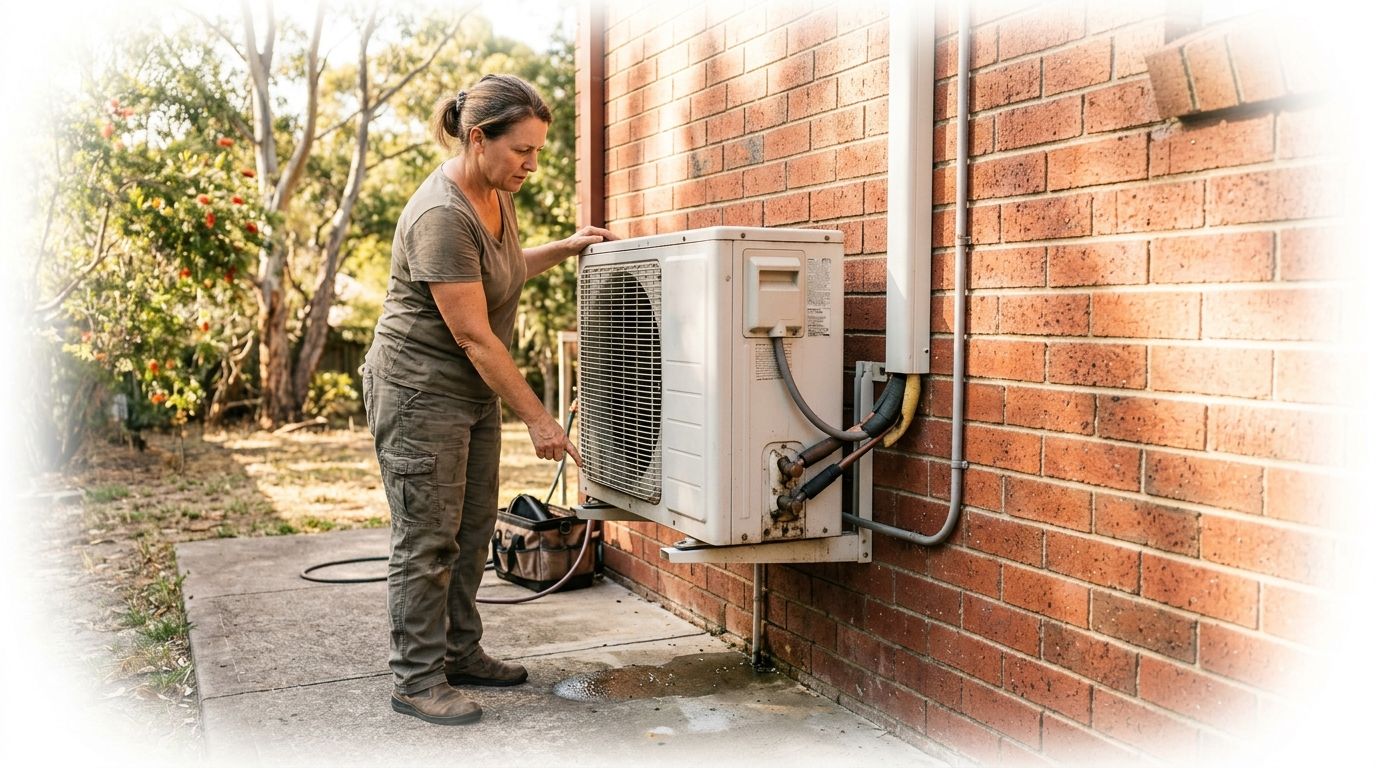
A professional air conditioning service for a split system covers six core tasks: filter removal and cleaning, evaporator coil inspection and clean, condensate drain flush, refrigerant pressure check, electrical connection inspection and a full operational test. For most Sydney homes, the whole job takes between 45 and 90 minutes and costs $150 to $250. Knowing what's involved makes it easier to judge whether you're getting value for money.
Here's what a qualified AirFlow technician works through during a standard service visit:
- Filter removal and cleaning. Filters are removed, washed and dried before being refitted. Blocked filters are one of the most common causes of reduced airflow and efficiency loss.
- Evaporator coil inspection and clean. The coil is inspected for mould, dust build-up and physical damage. A fouled coil is cleaned using appropriate coil cleaner to restore heat exchange efficiency.
- Condensate drain flush. The drain line is flushed clear of algae and debris to prevent the water leaks described earlier in this article.
- Refrigerant pressure check. Pressures are tested against manufacturer specifications. Any deviation points to a leak that needs locating and repairing.
- Electrical connection inspection. Terminals, capacitors and wiring are checked for corrosion, loose connections or signs of heat damage.
- Full operational test. The unit is run through heating and cooling modes to confirm it's performing correctly before the technician leaves.
If your unit hasn't been serviced in over two years, a standard clean may not be enough. A deep chemical clean, which costs $250 to $400, uses a foaming agent to break down heavy mould and grease build-up on the coil and fan barrel. It's the right call for any unit with a strong musty smell or visible contamination inside the casing.
To put the cost in perspective: a Daikin Cora 2.5kW split system costs $1,800 to $2,200 fully installed. A $150 to $250 annual service is a straightforward way to protect that investment and keep the unit running at the efficiency you paid for. All AirFlow services are carried out by Arctick-registered technicians and are covered by our 5-year installation warranty on any work we perform.
How Often Should You Book Split System Servicing?
Most residential split systems should be professionally serviced once per year. Units that run year-round or sit in high-humidity environments, common in Sydney's coastal suburbs and Inner West, benefit from servicing every six months. Annual servicing keeps the system clean, efficient and covered under the manufacturer's warranty.
Warranty coverage is a practical reason to stay on schedule. Daikin, Fujitsu and Mitsubishi Electric all include conditions in their warranty documentation that require evidence of regular professional servicing. A Daikin Cora, a Fujitsu ASTG Series or a Mitsubishi Electric MSZ Series unit that hasn't been serviced annually may have warranty claims disputed if a fault develops. Keeping a record of your service visits is a simple way to protect yourself.
Between professional services, homeowners can and should clean their own filters every four to six weeks. It takes about 10 minutes, costs nothing and makes a measurable difference to airflow and efficiency. Our step-by-step guide on how to clean your air conditioner filters walks through the process for the most common indoor unit types.
| Usage Pattern | Recommended Service Frequency | DIY Filter Clean |
|---|---|---|
| Seasonal use (summer or winter only) | Once per year | Every 4 to 6 weeks during use |
| Year-round use, low humidity area | Once per year | Every 4 weeks |
| Year-round use, coastal or high-humidity suburb | Every 6 months | Every 3 to 4 weeks |
| Not serviced in over 2 years | Deep chemical clean, then annual | Every 4 weeks going forward |
Frequently Asked Questions
How often should a split system air conditioner be serviced?
Most residential split systems should be professionally serviced once per year. Units running year-round in Sydney's coastal or high-humidity suburbs, such as Balmain, Manly or Neutral Bay, benefit from a service every six months. Between professional visits, clean your filters every four to six weeks to maintain airflow and efficiency.
How do I know if my split system needs a regas?
The clearest signs of low refrigerant are a system that runs continuously but fails to reach the set temperature, ice forming on the indoor unit's coil, or a hissing sound near the indoor or outdoor unit. Refrigerant doesn't deplete under normal conditions, so low pressure always means there's a leak that needs to be found and repaired before any regas is carried out. Refrigerant handling must be performed by an Arctick-registered technician under Australian regulations.
Can I service my split system myself?
Homeowners can safely clean the filters on their indoor unit every four to six weeks, and this makes a real difference to airflow and running costs. Everything beyond filter cleaning, including coil cleaning, drain flushing, refrigerant checks and electrical inspections, requires a licensed technician. Attempting these tasks without the right qualifications can void your manufacturer's warranty and create safety risks.
How much does a split system service cost in Sydney?
A standard professional service for a residential split system in Sydney typically costs $150 to $250. If the unit hasn't been serviced in over two years or has a strong musty smell, a deep chemical clean is the better option at $250 to $400. Both services are completed in a single visit and restore the unit to full operating efficiency.
Don't Wait Until Your Split System Breaks Down
The seven signs covered in this article are your system's way of asking for attention before a small problem becomes an expensive one. Acting on weak airflow, strange smells, water leaks, unusual noises, poor performance, rising power bills or a fault light is almost always cheaper than an emergency repair or a full replacement. A well-maintained split system lasts 15 years or more. A neglected one rarely does.
AirFlow Australia is fully licensed and Arctick registered, with same-day repair availability across Sydney's Inner West and North Shore. Every service and installation we carry out is backed by our 5-year installation warranty. If your system is already showing a fault, our air conditioning repairs page covers what to expect and how to book.
To book a service or get a quote, call AirFlow Australia on 0423 535 905 or request a quote online. Don't wait for a breakdown on the hottest day of the year.