

Why Your Aircon Smells and What It's Telling You
You flick on the split system in your Balmain terrace after the first real scorcher of summer and within seconds the room fills with a stale, musty odour. It's one of those moments that makes you wonder whether the air conditioning is actually making things worse. Aircon smells are one of the most common complaints we hear from Sydney homeowners, and they're almost never just a cosmetic problem. A bad smell is your system signalling that something needs attention, whether that's a blocked filter, a bacteria-laden drain pan, a wiring issue or something more serious. This article covers the four main causes of aircon odours, how to identify which one you're dealing with, and what to do about each one.
Key takeaways
- Aircon smells indicate a problem that needs fixing, from dirty filters to refrigerant leaks
- Musty odours usually come from mould on the evaporator coil or in the drain pan
- Burning or chemical smells require immediate professional attention
- Regular filter cleaning and annual professional servicing prevent most odour issues
The Most Common Reasons Your Aircon Smells Bad
Most aircon smells fall into one of four categories, each with a distinct odour profile and a specific underlying cause. Identifying the smell correctly is the fastest way to work out whether you can fix it yourself or need to call a technician.
Musty or Mouldy Smell: Dirty Filters and Evaporator Coils
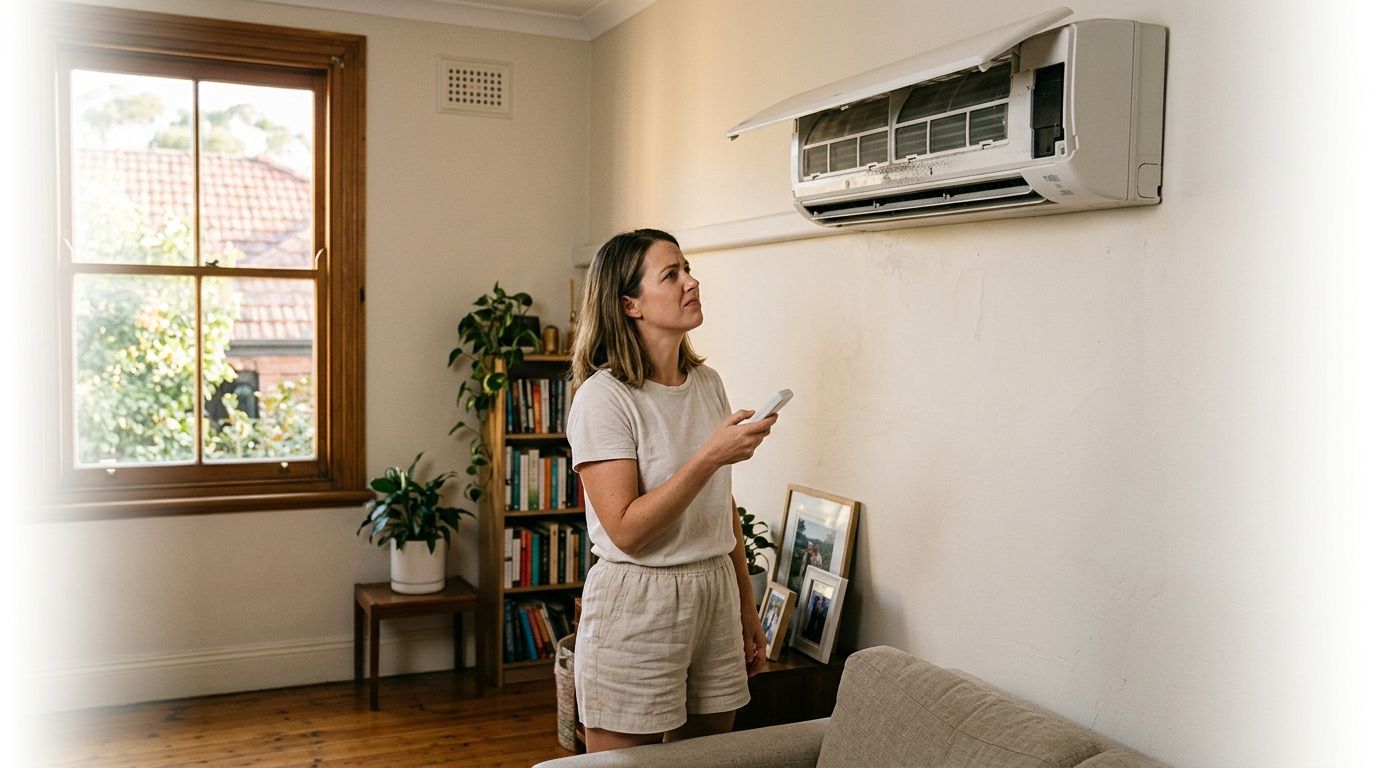
A musty or mouldy smell is the single most common aircon complaint we deal with across Sydney homes, particularly during the humid summer months. The indoor unit of a split system is a naturally damp, dark environment. Warm, moisture-laden air passes over the cold evaporator coil, condensation forms, and if airflow is restricted by a dirty filter, that moisture lingers long enough for mould and mildew to take hold on the coil surface and filter material itself.
The fix starts with the filters. During periods of heavy use, filters should be cleaned every four to six weeks. Most modern split systems make this straightforward. The Daikin Cora series (for example, the FTXM25Y 2.5kW) has a slide-out filter panel that takes about five minutes to remove, rinse under a tap and refit. The Fujitsu ASTG series (such as the ASTG09KMCA 2.5kW) uses a similarly accessible washable filter design that homeowners can maintain themselves between annual professional services.
Cleaning the filters will often resolve a mild musty smell within a day or two of operation. If the odour persists after a filter clean, mould has likely colonised the evaporator coil itself, which requires a professional deep clean to treat properly.
Dirty Sock Syndrome: Bacteria in the Drain Pan
'Dirty sock syndrome' is a well-documented HVAC phenomenon, and the name is accurate. The smell is sour and sweaty, somewhere between a gym bag and a damp towel left in a pile. The cause is bacteria and biofilm that accumulate in the condensate drain pan and drain line, particularly in units that run frequently in humid conditions or haven't been serviced in over 12 months.
Older units are especially prone to this because biofilm builds up gradually and a standard filter clean won't touch the drain pan. The bacteria thrive in the shallow pool of condensate water that sits in the pan between drain cycles. A blocked drain line makes the problem worse by allowing that water to stagnate, and it can also lead to water leaking from the indoor unit into your ceiling or walls. If you've noticed dripping or pooling water alongside the smell, our article on aircon water dripping covers that issue in detail.
The most effective fix for dirty sock syndrome is a professional deep clean that includes flushing the drain line and treating the pan with an appropriate biocide. A surface-level service won't fully clear established biofilm.
Burning or Electrical Smell: Dust and Potential Faults
A faint burning smell when you first switch to heating mode at the start of winter is usually nothing to worry about. Dust settles on the heating element during the months it sits idle, and that dust burns off within a few minutes of operation. The smell should disappear quickly and not return during that session.
A persistent burning smell, or one that is acrid, sharp or chemical in character, is a different matter entirely. This can indicate a wiring fault, a failing run capacitor, an overheating fan motor or a problem with the control board. None of these are issues to ignore or monitor over a few days. Switch the unit off at the wall and call a licensed technician before running it again.
Electrical work on air conditioning systems in Australia must be carried out by a licensed electrician or an ARC Tick-registered technician, as required under the Refrigerant Handling Licence framework and AS/NZS 3000 wiring standards. Any technician who suggests otherwise is not someone you want working on your system.
Rotten Egg or Chemical Smell: Refrigerant Leaks and Pests
Two very different problems can produce an unusual or chemical smell from your aircon, and it's worth distinguishing between them. A sweet, faintly chemical odour, sometimes described as similar to ether or nail polish remover, can indicate a refrigerant leak. Modern refrigerants like R-32 and R-410A are not acutely toxic in the small quantities involved in a domestic leak, but a leaking system will progressively lose cooling capacity and eventually stop working altogether. Refrigerant handling is strictly regulated in Australia and repairs must be carried out by an Arctick-registered technician.
A rotten egg or decomposing smell is a different problem with a more unpleasant source. Small animals, including possums, birds and rodents, occasionally find their way into roof-mounted ducted systems or the outdoor unit of a split system, and don't always find their way back out. If the smell is localised to one area of the house or appears suddenly after a period of the system sitting unused, a pest in the ductwork is a strong possibility. In both cases, the right call is to switch the unit off and contact a professional rather than attempting to investigate yourself.
How to Fix Aircon Smells: What You Can Do Yourself
Before calling a technician, there are five straightforward steps you can safely work through at home to clear most musty or stale aircon smells. These steps cover the areas a homeowner can access without tools or specialist knowledge. If the smell is burning, chemical or resembles rotten eggs, skip the DIY steps entirely and go straight to a professional.
- Turn the unit off and let it dry out for 30 minutes. Switch the system off at the remote and leave the indoor unit to air out. This allows residual moisture on the evaporator coil and in the drain pan to begin evaporating, which can reduce mild odours caused by dampness rather than active mould growth.
- Remove and wash the filters. Slide out the filter panels, rinse them under warm running water and use a small amount of mild detergent to work out any built-up dust and grime. Rinse thoroughly and allow the filters to dry completely in a shaded spot before reinserting them. Never refit a damp filter. For a detailed walkthrough of this process, see our guide on how to clean air conditioner filters.
- Check the condensate drain outlet outside. Find where the drain line exits the building, usually a small pipe near the outdoor unit or through an external wall. Check that it is not blocked by debris, dirt or spider webs. A blocked drain causes water to back up into the drain pan, which accelerates bacterial growth and worsens odours.
- Run fan-only mode for 20 to 30 minutes after cooling. Most split systems allow you to run the fan without the compressor. Doing this at the end of a cooling session helps dry out the indoor unit, reducing the moisture that mould and bacteria need to thrive. Check your remote for a 'Fan' or 'Dry' mode option.
- Wipe down the accessible louvre blades. Use a damp cloth to wipe the horizontal and vertical louvre blades at the front of the indoor unit. These surfaces collect dust and can harbour mildew, particularly around the edges where airflow is slower.
These steps will resolve most mild musty smells within a day or two of normal operation. A burning smell, a sharp chemical odour or a rotten egg smell should not be self-diagnosed or treated at home. Switch the unit off and contact a licensed technician.
When to Call a Professional for Smelly Aircon Issues
Some aircon smells are a clear signal to stop using the system and call a licensed technician. Attempting to diagnose or run a unit with an electrical fault or refrigerant leak is not a maintenance task, it is a safety risk. Knowing where the DIY boundary sits will save you time and protect your system from further damage.
There are three scenarios that always require professional attention:
1. Burning or electrical smells that persist beyond a few minutes. A brief dusty smell at the start of heating season is normal. A persistent, acrid or sharp burning odour is not. This can indicate a failing capacitor, an overheating motor or a wiring fault. Switch the unit off at the wall and book air conditioning repairs before running the system again. Do not wait to see if it clears on its own.
2. Any chemical or refrigerant-type odour. A sweet, faintly solvent-like smell coming from the indoor unit is a strong indicator of a refrigerant leak. Refrigerant handling is regulated under Australia's Arctick licensing framework and cannot be addressed by a homeowner. A leaking system will also progressively lose its ability to cool, so the sooner it is assessed the better.
3. Musty smells that return within days of cleaning the filters. If you have cleaned the filters thoroughly and the odour is back within a week, mould has established itself deeper in the system, typically on the evaporator coil surface or inside the drain pan. This is beyond what a cloth and a rinse can reach. AirFlow Australia's deep cleaning service uses a specialised foaming coil cleaner and a high-pressure flush to break down and remove biofilm from the coil fins and drain pan, areas a homeowner simply cannot access safely or effectively.
Units with built-in self-cleaning functions still benefit from this level of service. The Mitsubishi Electric MSZ-AP series (such as the MSZ-AP25VGD 2.5kW) uses an internal self-cleaning cycle that helps keep the coil drier between uses, but it does not remove established biofilm from the drain pan or deep coil fins. Annual professional servicing keeps these features working as intended and prevents the gradual build-up that causes persistent odours.
Older ducted systems in Upper North Shore suburbs like Wahroonga and Mosman are particularly prone to odour issues. Many of these homes have ducted systems that are 10 to 15 years old, with ductwork running through roof cavities that accumulate dust, humidity and in some cases mould over time. A standard filter clean is rarely enough for these systems. A full duct inspection and professional clean is the appropriate starting point. To find out what a professional service involves and what to expect, visit our professional air conditioning cleaning page.
Frequently Asked Questions About Aircon Smells
Why does my aircon smell musty when I first turn it on?
A musty smell at start-up is almost always caused by mould or mildew that has grown on the evaporator coil or filter during a period of inactivity. Moisture left inside the unit after the last cooling session creates the right conditions for mould to establish itself. Cleaning the filters and running the system in fan-only mode for 20 to 30 minutes after each cooling session will usually prevent this from recurring.
Is it safe to run my aircon if it smells like burning?
A brief dusty smell at the start of heating season is normal and clears within a few minutes. A persistent or acrid burning smell is not safe to ignore. Switch the unit off at the wall immediately and contact a licensed technician, as this can indicate a wiring fault, a failing capacitor or an overheating motor.
Can I use air freshener or deodorant spray to fix aircon smells?
Air freshener will mask an aircon smell temporarily but will not fix the underlying cause. Spraying products into the indoor unit can also coat the evaporator coil and filter with residue, which attracts more dust and can worsen odours over time. Address the source of the smell directly rather than covering it up.
How often should I have my aircon professionally cleaned to prevent smells?
For most Sydney homes, a professional deep clean once a year is sufficient to prevent odour build-up in the coil, drain pan and drain line. Homes in humid areas or households that run their system heavily through summer may benefit from a service every six months. Regular filter cleaning between professional services makes a significant difference.
Keep Your Aircon Fresh All Year Round
A little routine maintenance goes a long way toward keeping your system odour-free through every season. Most aircon smells are entirely preventable with regular filter cleaning every four to six weeks during heavy use and an annual professional service to clear the coil, drain pan and drain line. The smells that demand immediate action, burning, chemical or rotten egg odours, are the exception. Those are warning signs that the system needs to be switched off and assessed by a licensed technician before it runs again.
If your Sydney home is overdue for a service or you're dealing with a smell that hasn't cleared after cleaning the filters, the AirFlow Australia team is ready to help. Book an air conditioning service or call us directly on 0423 535 905. We offer same-day availability for urgent repair situations, so you're never left waiting when something needs immediate attention.