
Why It Matters to Clean the Air Ducts in Your Home
If you've switched on your ducted system after a long Sydney summer and noticed a faint musty smell drifting through the vents, or rooms in your Wahroonga or Chatswood home that just don't seem to cool down the way they used to, the ductwork is often the culprit. Taking the time to clean the air ducts is one of the most overlooked parts of home maintenance, yet it has a direct impact on the air your family breathes every day.
Air ducts are the network of insulated channels that carry conditioned air from your ducted air conditioning unit to every room in the house. Over time, dust, pet dander, pollen, mould spores and general household debris settle on the interior walls of those ducts. Sydney's humid coastal climate makes this worse than in drier cities. Moisture in the air encourages mould growth inside ductwork, particularly in systems that aren't run regularly or that have small leaks at the joints.
The consequences are practical, not just cosmetic. Clogged ducts restrict airflow, which forces your system to work harder and consume more electricity to reach the set temperature. That extra strain shortens the lifespan of the unit and pushes up your energy bills. Poor duct hygiene also means your system is actively circulating allergens and mould spores through the home, which matters especially for households with asthma or young children.
Key takeaways
- Clean the air ducts every three to five years to maintain airflow and air quality.
- Clogged ducts force your system to work harder, increasing energy bills and reducing lifespan.
- You can clean vent grilles yourself, but internal ductwork requires professional equipment.
What You Can Clean Yourself (and What You Cannot)
There is a clear line between what a homeowner can safely do and what requires a licensed professional with commercial equipment. The good news is that the accessible parts of your ducted system, the vent grilles, registers and return-air filter, are straightforward to maintain yourself. The internal duct walls, bends, plenums and the air handler unit are a different matter entirely.
Step-by-Step: Cleaning Your Vent Grilles and Registers
Cleaning your vent covers and the immediate duct collar is a job most homeowners can handle in under an hour. Work through these steps carefully and you'll remove the bulk of the surface-level dust that accumulates between professional cleans.
- Turn off the system at the controller or thermostat. Never work on grilles or registers while the system is running. Switch it fully off, not just to standby.
- Remove the vent grilles. Most ducted grilles unclip or unscrew easily. Take them outside or to a laundry tub and wash them in warm soapy water. A soft brush helps dislodge built-up dust from the louvres. Rinse thoroughly and allow to dry completely before refitting.
- Vacuum around the duct opening. Use a vacuum cleaner with a brush attachment to clear dust from the edges of the duct collar and the ceiling or wall surface around it. Work gently to avoid pushing debris further into the duct.
- Wipe the interior of the duct collar. Using a dry microfibre cloth, wipe the inside of the duct as far as you can comfortably and safely reach, typically 20 to 30 centimetres. Avoid harsh chemical sprays inside the duct, as residue can be circulated through the home when the system runs.
- Check for visible mould or discolouration. Before refitting the grille, shine a torch into the duct collar. If you see dark spotting, a grey or green film, or any sign of moisture damage, stop and call a professional. Do not refit the grille and run the system, as this will spread spores through the house.
- Replace or clean the return-air filter. The return-air filter is usually located behind a large grille on the ceiling or wall. Slide it out, vacuum off loose dust, and wash it under running water if it's a reusable type. If it's a disposable filter, replace it with a new one of the same size and rating. A blocked filter is one of the most common causes of poor airflow.
- Refit the grilles and run the system on fan-only mode for 10 minutes. Once everything is dry and back in place, run the system on fan-only (no cooling or heating) to clear any remaining loose dust from the collar area before returning to normal operation.
For a more detailed walkthrough of grille removal, washing techniques and what to look for on different grille types, see our guide on how to clean your aircon vent and ducted grilles.
When the Job Is Beyond DIY
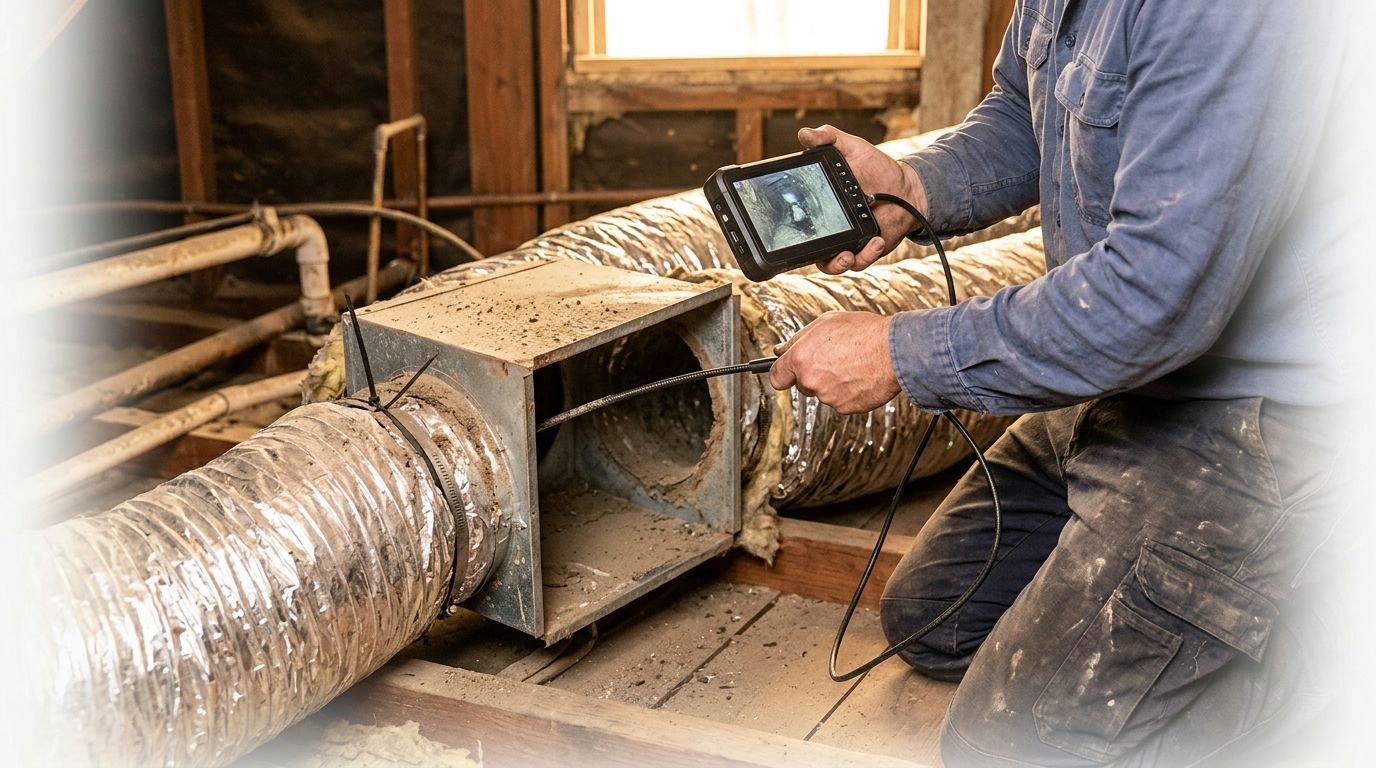
The steps above cover the surfaces you can safely reach. The internal duct network, including the flexible or rigid runs between rooms, the bends, the main plenum box and the air handler itself, requires professional equipment to clean properly. No household vacuum or brush can generate the negative pressure needed to dislodge and capture debris from deep inside the system.
Call a professional duct cleaner if you notice any of the following:
- Visible mould growth inside the duct collar, even after cleaning the grille
- A persistent musty or stale odour that returns within days of cleaning the grilles
- Heavy dust discharge from vents when the system first starts up
- Evidence of vermin activity, such as droppings near grilles or scratching sounds in the ceiling
- A system that has not had a professional duct clean in more than three to five years
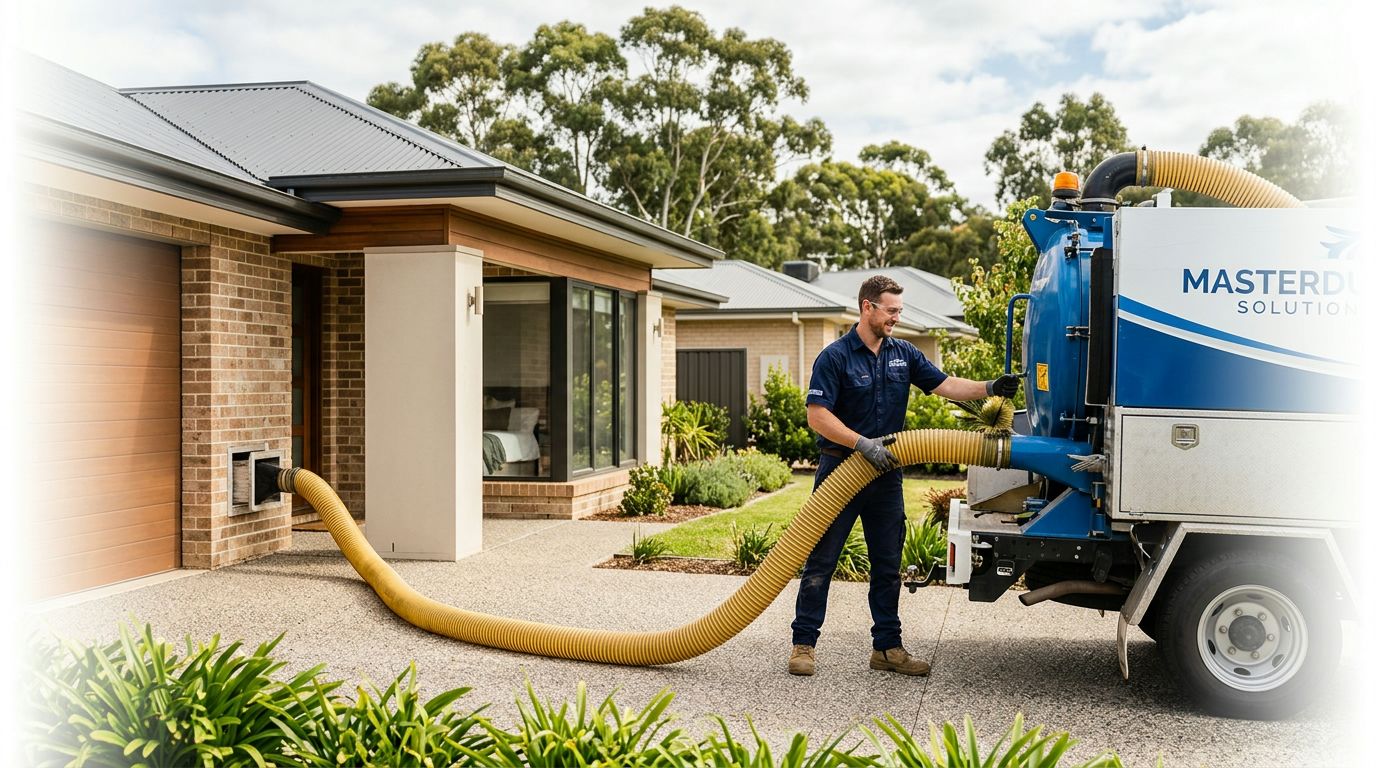
Professional duct cleaning uses truck-mounted or portable negative-pressure vacuum systems to create suction throughout the duct network while rotary brush agitation loosens debris from the duct walls. A sanitising treatment is then applied to address mould and bacteria. It's a thorough process that takes two to four hours for a typical Sydney home, and the results are immediately noticeable in airflow and air quality.
If you've invested in a premium system like the Daikin FDYAN series ducted inverter, professional duct cleaning is especially worthwhile. Keeping the ductwork clean protects the heat exchanger and fan components from the strain of restricted airflow and helps you get the full service life from a system that represents a significant investment.
How Often Should You Clean the Air Ducts?
For most Sydney homes with a well-maintained ducted system, a professional duct clean every three to five years is the right baseline. That interval shortens considerably if you have pets, allergy sufferers or recent building work in the home. Manufacturer servicing guidelines for leading brands like the Fujitsu ARTG series ducted reverse cycle systems also recommend periodic professional maintenance to keep warranties valid and performance consistent.
| Household Situation | Recommended Interval | Notes |
|---|---|---|
| Standard home, no pets or allergies | Every 4 to 5 years | Combine with annual filter service for best results |
| Home with pets or allergy sufferers | Every 2 to 3 years | Pet dander accumulates rapidly in ductwork and is difficult to remove without professional equipment |
| Recent renovation or building work | Within 6 months of completion | Construction dust clogs ducts quickly and can coat the heat exchanger |
| Visible mould or musty odour | Immediately | Do not delay. Mould spreads through the duct network every time the system runs |
| System unused for 12 or more months | Before first use | Dust settlement and pest entry are both common in dormant systems |
One thing worth clarifying: full duct cleaning is a separate job from your annual filter clean and your annual professional service. Cleaning the return-air filter is something you should do every one to three months depending on usage. An annual professional service covers the indoor and outdoor units, refrigerant levels, electrical connections and coil condition. Neither of those replaces a full duct clean, and a full duct clean does not replace them. All three are part of a complete maintenance routine. For a full breakdown of what an annual service covers and how to schedule it, our air conditioner maintenance guide is a good starting point.
What Does Professional Duct Cleaning Cost in Australia?
Professional duct cleaning for a standard three to four-bedroom Sydney home typically costs between $300 and $700, depending on the number of vents, the size of the system, how accessible the ductwork is and whether a sanitising treatment is included. Per-vent pricing is common, with most reputable operators charging between $25 and $50 per vent outlet.
| Service | Typical Cost (AUD) |
|---|---|
| Vent grille cleaning only (DIY) | $0 (your time and cleaning supplies) |
| Professional duct clean, 3-bedroom home | $300 to $500 |
| Professional duct clean, 4 to 5-bedroom home | $500 to $700+ |
| Sanitising treatment (add-on) | $80 to $150 |
| Mould remediation (if required) | $500 to $2,000+ |
Mould remediation inside ductwork is a more involved process than a standard clean. If a technician finds active mould growth in the plenum or along duct runs, the affected sections may need to be treated with specialist antimicrobial agents, and in serious cases, sections of flexible duct may need to be replaced entirely. That work sits outside the scope of a routine duct clean and is priced separately.
Be cautious of operators advertising a whole-home duct clean for under $150. This pricing model is almost always a bait-and-switch, where the low headline price covers only a basic inspection or a single vent, with significant upsells applied on the day. Reputable duct cleaning companies will provide a fixed quote based on your number of vents and system configuration before any work begins.
The sanitising treatment add-on is worth considering for homes in Sydney's more humid suburbs, particularly near the harbour or in low-lying areas of the Inner West where condensation inside ductwork is more common. It adds a modest cost but meaningfully reduces the risk of mould returning between cleans.
For a professional clean carried out by a licensed team that knows Sydney ducted systems inside out, take a look at our professional air conditioning cleaning service or call us on 0423 535 905 to get a fixed quote for your home.
Frequently Asked Questions About Cleaning Air Ducts
How do I know if my air ducts need cleaning?
The clearest signs are a musty or stale smell coming from your vents when the system runs, visible dust discharge when the system first starts up, or rooms that no longer cool or heat as evenly as they used to. If it has been more than five years since your last professional duct clean, that alone is a good reason to book one regardless of whether you've noticed symptoms.
Can I clean my air ducts myself?
You can clean the vent grilles, registers and return-air filter yourself, and doing so every one to three months is a great habit. The internal duct network requires professional equipment, specifically negative-pressure vacuum systems and rotary brush agitation, that no household tool can replicate. Attempting to clean deep inside the ducts without the right gear typically pushes debris further into the system rather than removing it.
How often should air ducts be cleaned?
Most Sydney homes need a professional duct clean every three to five years under normal conditions. That interval drops to every two to three years for homes with pets or allergy sufferers, and to within six months of completion for any home that has had renovation or building work done. Visible mould or a persistent musty odour means the job should not wait.
Does cleaning air ducts improve air quality?
Yes, noticeably so. Duct cleaning removes accumulated dust, pet dander, mould spores and other allergens that your system would otherwise circulate through every room in the house. Households with asthma sufferers or young children typically report the most immediate improvement, though the benefits in airflow and reduced odour are apparent in any home.
Keep Your Ducted System Running at Its Best
Cleaning your vent grilles and return-air filter every one to three months is one of the simplest and most effective things you can do to maintain your ducted system. It costs nothing but a little time and keeps airflow strong between professional visits. For everything inside the duct network, a licensed professional with the right equipment is the only way to do the job properly.
Clean ductwork means cleaner air for your family, lower energy bills and a longer working life for your system. Those three outcomes are worth the modest cost of a professional clean every few years.
If your Sydney home is due for a professional duct clean or a full system service, the AirFlow Australia team covers the North Shore and Inner West and can provide a fixed quote before any work begins. Call us on 0423 535 905 to book.