
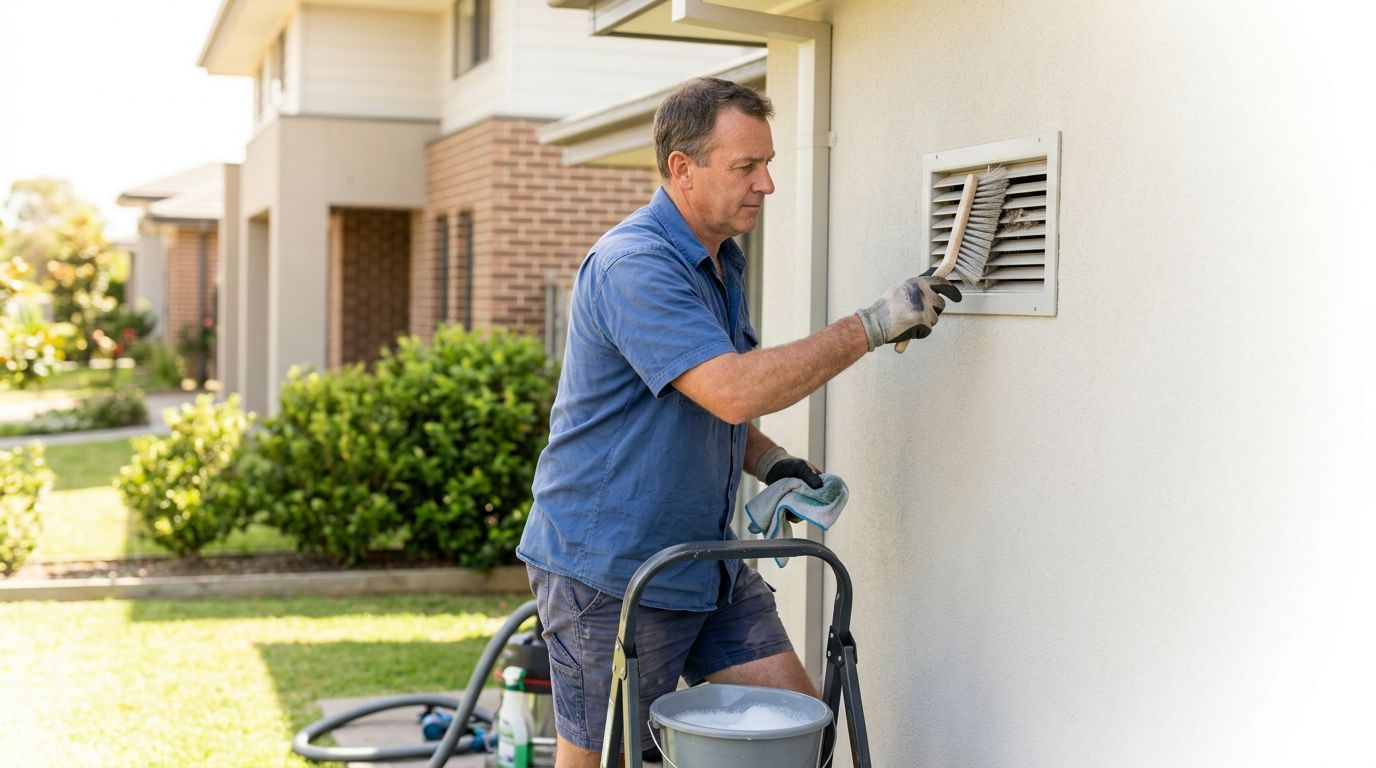
Why Cleaning Your Aircon Vent Matters More Than You Think
Imagine it's a 35-degree January afternoon in Wahroonga. You flick on the ducted system, wait for that familiar rush of cool air, and instead get a weak, slightly musty trickle from the ceiling. The culprit is almost always the same: a clogged or neglected aircon vent. Ducted vents and grilles are the most overlooked part of air conditioning maintenance, yet they have a direct impact on air quality, system efficiency and your quarterly energy bill.
This guide covers everything you need to tackle the job yourself: the tools to gather, a step-by-step cleaning process for both ceiling and wall grilles, how often to clean them, and the signs that point to a professional service rather than a DIY fix.
Key takeaways
- Regular cleaning of your aircon vent improves efficiency and indoor air quality significantly.
- Supply vents need cleaning every two to three months, return-air grilles every four to six weeks.
- Mould, persistent odours and weak airflow require professional attention, not DIY fixes.
What You'll Need Before You Start Cleaning Ducted Vents and Grilles
A little preparation before you start will save you time and protect your system. Rushing in without the right tools is how grilles get cracked and warranties get voided. Here is exactly what to do before you touch a single vent.
- Turn off the ducted system at the controller and isolate power. Switch the system off at the wall controller and, for ceiling vents, turn off the circuit breaker at your switchboard. Never clean vents while the system is running.
- Gather your cleaning supplies. You will need a microfibre cloth, a soft-bristle brush, mild dish detergent, warm water in a bucket, a vacuum cleaner with a brush attachment, and a flathead or Phillips screwdriver for any grilles that are screwed in place.
- Lay a drop sheet beneath ceiling vents. Dust and debris will fall when you remove or brush the grille. A drop sheet protects your floors and furniture and makes clean-up much faster.
- Have a torch ready to inspect inside the duct opening. Once the grille is off, a quick look inside with a torch can reveal mould, pest activity or excessive dust build-up that needs professional attention before you reassemble.
No specialist chemicals are needed for routine grille cleaning. Harsh sprays and solvent-based cleaners can discolour or warp plastic louvres and may void the warranty on systems like Daikin Ducted Air Conditioning units. The same applies to Fujitsu ducted systems, where the manufacturer's care instructions specifically recommend mild cleaning agents only. Warm water with a small amount of dish detergent is all you need for the grille itself.
For a broader look at keeping your system in top shape, see our air conditioner maintenance guide.

How to Clean Your Aircon Vent and Grilles: Step-by-Step
Cleaning a ducted aircon vent takes around 10 to 15 minutes per grille and requires no specialist tools or chemicals. The process is the same whether you have a Daikin, Mitsubishi Electric or Fujitsu Ducted Air Conditioning System: remove the grille, clean it thoroughly, wipe the duct collar, refit and test. Follow these steps in order for a safe, effective result.
- Remove the grille. Most modern ducted grilles simply unclip from the ceiling or wall frame by hand. Fujitsu ducted systems, for example, use a spring-clip design that releases with gentle downward pressure on one edge. Older grilles may have one or two screws at the corners, so check before you pull. Support the grille with one hand as it comes free to avoid dropping it.
- Vacuum loose dust from the grille and duct opening. Use your vacuum cleaner's brush attachment to remove surface dust from both sides of the grille. Run the brush attachment lightly around the inside edge of the duct collar to pick up any loose debris. Do not push the vacuum nozzle deep into the duct itself, as this can disturb insulation or dislodge internal components.
- Wash the grille in warm soapy water. Place the grille in a bucket or laundry tub with warm water and a small amount of mild dish detergent. Scrub gently with a soft-bristle brush, paying attention to the louvres and any recessed edges where dust compacts. Rinse thoroughly under clean water and allow the grille to dry completely before refitting. A wet grille reinstalled too soon creates the exact humid conditions that mould needs to take hold.
- Wipe the duct collar and surrounding ceiling surface. Dampen a microfibre cloth with clean water and wipe around the inside of the duct collar and the ceiling paint immediately surrounding the vent opening. This removes the greasy dust film that builds up over months of use.
- Inspect inside the duct collar with a torch. Before refitting, shine a torch into the opening. If you see black or green discolouration on the duct lining, that is mould. Stop here and book a professional deep clean rather than continuing with a DIY fix. Disturbing active mould without proper containment can spread spores through the entire duct network.
- Refit the grille and restore power. Clip or screw the grille back into position, making sure it sits flush against the ceiling or wall. Return to your switchboard, restore the circuit breaker, and switch the system back on at the wall controller.
- Run the system for five minutes and check airflow. Set the system to cooling or fan-only mode and walk to each vent in the zone. You should feel a consistent, unobstructed airflow from every supply vent. A vent that still feels weak after cleaning may have a blockage further into the duct that needs professional attention.
While you have the grille off, it is also a good time to check the filter. Read our guide on how to clean air conditioner filters for the full process.
Ceiling Vents vs Wall Vents: Are There Any Differences?
Ceiling supply vents and wall return-air grilles are cleaned using exactly the same method, but they have very different workloads. Ceiling supply vents push conditioned air into the room, so they collect a moderate amount of dust over time. Return-air grilles, typically mounted on a wall or ceiling in a central hallway, pull all the room air back through the system, which means they act as a whole-house dust filter. Expect return-air grilles to be noticeably dirtier and clean them every four to six weeks during heavy-use periods. Supply vents can generally go two to three months between cleans.
Floor vents are less common in Sydney homes but do appear in some older properties in Wahroonga and Gordon, particularly those with under-floor duct runs. Because foot traffic constantly disturbs debris near floor level, these vents should be vacuumed more frequently than ceiling or wall grilles, ideally every two to four weeks during peak season.
How Often Should You Clean Ducted Aircon Vents in a Sydney Home?
In a Sydney home, supply vents should be cleaned every two to three months, return-air grilles every four to six weeks during peak use, and a full professional duct inspection should be booked every two to three years. Sydney's humid coastal climate creates conditions where dust and moisture combine faster than in drier inland cities, making a consistent cleaning schedule more important here than almost anywhere else in Australia.
Suburbs close to the harbour and coast, including Balmain, Newtown and Neutral Bay, experience higher ambient humidity for much of the year. That moisture gets drawn into the duct system every time the air conditioner runs, and it settles on any dust sitting inside the grille or collar. The result is a mould-friendly environment that builds up quietly between cleans. Sticking to the schedule below keeps that risk in check.
| Vent Type | Recommended Cleaning Frequency | Notes |
|---|---|---|
| Supply vents (ceiling) | Every two to three months | More frequent if near a kitchen or bathroom |
| Return-air grilles | Every four to six weeks (peak season) | Every two to three months in low-use periods |
| Floor vents | Every two to four weeks | Debris from foot traffic accumulates quickly |
| Full professional duct inspection | Every two to three years | Includes internal duct lining, coils and drain pan |
Homes with pets, young children or allergy sufferers should move to the shorter end of each range. Pet hair and dander pass straight through supply vents and coat the inside of the duct collar within weeks, not months.
A blocked or dirty vent forces the ducted system to work harder to push air through the restricted opening. That extra load raises energy consumption and puts unnecessary strain on the fan motor and compressor. Both Daikin Ducted Air Conditioning Systems and Mitsubishi Electric Ducted Systems include regular vent maintenance as part of their recommended care schedules, and neglecting it can affect your warranty position if a fault is traced back to restricted airflow.
For a thorough professional clean, AirFlow Australia's air conditioning cleaning service covers the full ducted system, not just the grilles.
Signs Your Aircon Vent Needs More Than a DIY Clean
A clean grille does not always mean a healthy duct system. If your ducted air conditioner is showing any of the five warning signs below, wiping down the louvres will not fix the underlying problem. These symptoms point to issues deeper in the ductwork that require a qualified technician to diagnose and resolve safely.
- Visible mould or black spotting inside the duct collar. If your torch inspection reveals dark discolouration on the duct lining, that is active mould growth, not just dust. This is a health risk, particularly for households with children, elderly residents or anyone with respiratory conditions. Disturbing mould without proper containment spreads spores through every room the system serves. Professional remediation is the only safe course of action here.
- A persistent musty or stale smell even after cleaning the grilles. If you have washed every grille in the house and the odour returns within a day or two of running the system, the source is almost certainly mould or bacterial growth further inside the ductwork. A persistent odour is often a sign of mould deeper in the system, so find out more in our article on why your aircon smells and what each type of odour typically indicates.
- Noticeably reduced airflow from one or more vents despite clean grilles. Weak output from a specific zone, while other vents in the house feel normal, points to a blockage or collapsed section of duct between the air handler and that outlet. A faulty zone damper can produce the same symptom. Neither issue is accessible without opening the duct system.
- Rattling or vibrating grilles. A grille that buzzes or rattles when the system runs is either loose in its frame or has debris lodged inside the duct collar that vibrates with airflow. Loose fittings are a simple fix, but debris inside the duct, particularly if it includes pest nesting material, needs professional extraction before it causes further damage.
- A spike in energy bills without any change in usage patterns. Blocked or partially obstructed ducts force the fan motor to work harder to push the same volume of air through the system. If your electricity bill has crept up noticeably over one or two quarters and your usage habits have not changed, restricted airflow is one of the first things worth investigating.
AirFlow Australia's technicians service ducted systems across Sydney's North Shore and Inner West, including suburbs like Chatswood, Lane Cove, Balmain and Leichhardt. A standard service visit covers the full system, not just the grilles, so any duct blockage, damper fault or mould issue can be identified and quoted on the same day.
Frequently Asked Questions About Aircon Vents
How do I clean aircon vents?
Turn off the system and isolate power at the switchboard before you start. Remove the grille by unclipping or unscrewing it, vacuum both sides with a brush attachment, then wash the grille in warm soapy water and allow it to dry completely before refitting. Wipe the inside of the duct collar with a damp microfibre cloth and inspect for mould with a torch before reassembling.
How often should ducted aircon vents be cleaned?
In a Sydney home, ceiling supply vents should be cleaned every two to three months and return-air grilles every four to six weeks during peak use periods. Homes with pets or allergy sufferers should clean at the shorter end of each range. A full professional duct inspection is recommended every two to three years regardless of how diligent your DIY cleaning routine is.
Can dirty aircon vents make you sick?
Yes, they can. Dust, mould spores and allergens that accumulate on grilles and inside duct collars are pushed directly into your living spaces every time the system runs. Mould growth inside ductwork is a particular concern, as spores can aggravate asthma, trigger allergic reactions and cause respiratory irritation, especially in children and older adults.
Why does my aircon vent smell musty?
A musty smell from an aircon vent is almost always caused by mould or mildew growing somewhere in the duct system, most commonly on the evaporator coil, in the drain pan or on the duct lining near the air handler. Cleaning the grilles alone will not remove the odour if the source is deeper in the system. A professional service that includes coil cleaning and drain pan treatment is usually required to eliminate it permanently.
Keep Your Ducted System Running at Its Best
Cleaning your aircon vents is one of the simplest maintenance tasks a Sydney homeowner can do. Done regularly, it protects indoor air quality, keeps your system running efficiently and extends the working life of your ducted unit. DIY grille cleaning handles the surface layer, but a professional service every two to three years is essential for the full ductwork, including coils, drain pans and internal duct lining.
If your ducted system is ageing and no amount of cleaning is restoring performance, explore our ducted air conditioning installation options to find out what a modern replacement could do for your home's comfort and energy bills.
To book a service or cleaning, call the AirFlow Australia team on 0423 535 905. We service homes across Sydney's North Shore and Inner West, including suburbs like Chatswood, Wahroonga, Balmain and Leichhardt.