
Which Types of Aircon Actually Suit a Sydney Home?
It's 38 degrees on a January afternoon and your North Shore terrace has turned into an oven. You know you need air conditioning, but a quick search reveals split systems, multi-head splits, ducted systems and portable units all competing for your attention. Choosing the wrong types of aircon for your home means discomfort, overspending on installation, paying more to run the system, or discovering it can't handle your space. This guide covers the four main system types Sydney homeowners actually install, so you can match the right solution to your home size, layout and budget.
There is no single best option. A compact apartment in North Sydney has completely different needs to a four-bedroom family home in Wahroonga, and the right system for one will be the wrong system for the other. Read on and we'll break down exactly what each type does, what it costs and who it suits.
Key takeaways
- The four main types of aircon are split systems, multi-head splits, ducted systems and portable units, each suited to different home sizes and layouts.
- Split systems cost $1,200 to $2,500 and suit apartments and single rooms, while ducted systems cost $8,000 to $20,000 for whole-home coverage.
- Your home's construction type often determines the best choice, with terraces and Federation homes typically suited to splits and larger homes to ducted systems.
The Four Main Types of Aircon Explained
Sydney homes come in every shape and era. 1920s Federation bungalows, double-brick Inner West terraces, modern apartment blocks and sprawling Upper North Shore family homes each have different constraints around roof cavities, wall construction and available outdoor space. Understanding all four main aircon system types matters before you commit to anything.
Single-Zone Split Systems
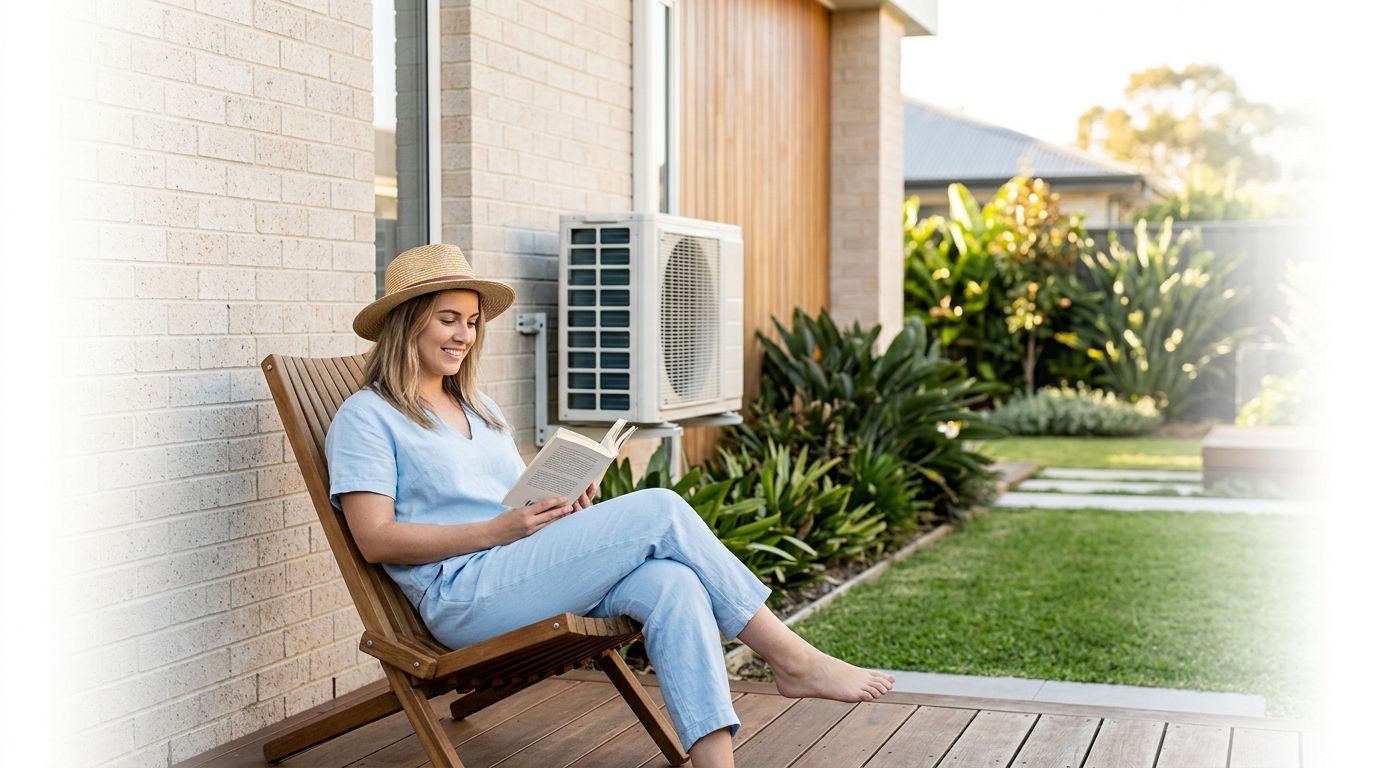
A single-zone split system pairs one indoor wall-mounted unit with one outdoor compressor. The indoor unit blows conditioned air directly into the room, while the compressor sits outside on a wall bracket or ground pad. Capacities typically run from 2.5 kW up to 9 kW, making split systems well suited to single rooms or open-plan living areas up to around 60 square metres. Installed costs generally sit between $1,200 and $2,500 depending on the unit capacity and the complexity of the installation.
Two of the most popular models AirFlow Australia installs are the Daikin Cora series (for example the FTXM25Y 2.5 kW, with an installed price of around $1,400 to $1,800) and the Fujitsu ASTG series (for example the ASTG09KMCA 2.5 kW), a reliable alternative with strong energy star ratings. Both are reverse-cycle units, meaning they heat and cool, which is worth remembering during Sydney's cooler winter months.
Multi-Head Split Systems
A multi-head split system connects two to five indoor units to a single outdoor compressor. This makes it a practical solution for homes where running ductwork through the ceiling is impractical or impossible. Think Federation homes in Wahroonga with no accessible roof cavity, or double-brick terraces in Leichhardt where cutting through walls for ducts would be a major structural job. Each indoor unit operates independently, so you can cool the bedroom while leaving the living room off.
Installed costs range from around $3,500 for a two-head system up to $7,000 or more for a four or five-head configuration. AirFlow Australia installs Mitsubishi Electric and Daikin multi-head systems across Sydney. The Mitsubishi Electric PUMY-P series is a popular premium outdoor unit for these configurations, known for its quiet operation and ability to handle multiple zones reliably even on peak summer days.
Ducted Reverse-Cycle Air Conditioning
Ducted systems use a central unit, typically located in the roof cavity or under the floor, to distribute conditioned air through a network of insulated ducts and ceiling or floor vents. The result is whole-home climate control with no visible indoor units on the walls. Ducted systems suit homes of 150 square metres or more and require adequate roof cavity space for the air handler and ductwork. Installed costs start at around $8,000 for a smaller home and can reach $20,000 or more for a large property with zoning controls.
AirFlow Australia installs Daikin and Mitsubishi Electric ducted systems across the North Shore and Upper North Shore, where larger homes on generous blocks are common. If you want a full breakdown of what drives the price up or down, the article on ducted aircon cost in Australia covers every variable in detail.
Portable and Window Units
Portable and window-mounted units are the lowest-cost entry point, typically priced between $400 and $1,200 with no installation required. They suit renters who cannot modify a property, or anyone needing a temporary cooling solution for a single room. The trade-offs are real though. Running costs are significantly higher than split systems, noise levels are noticeable, and most portable units cannot heat efficiently in winter. AirFlow Australia does not install these units, but they are worth understanding so you can make an informed comparison.
Side-by-Side Comparison
| System Type | Best For | Approx. Installed Cost | Energy Star Rating Range | Pros | Cons |
|---|---|---|---|---|---|
| Single-Zone Split System | Apartments, single rooms, open-plan areas up to 60 m² | $1,200 to $2,500 | 3 to 6 stars (cooling) | Affordable, efficient, heats and cools, quiet operation | Only conditions one zone at a time |
| Multi-Head Split System | Terraces, Federation homes, multi-room apartments without roof cavity access | $3,500 to $7,000+ | 3 to 5 stars (varies by indoor unit) | Multiple zones from one outdoor unit, no ductwork needed | Higher upfront cost, all zones share compressor capacity |
| Ducted Reverse-Cycle | Homes 150 m²+ with roof cavity access, Upper North Shore family homes | $8,000 to $20,000+ | 2 to 4 stars (whole-system rating) | Whole-home comfort, no visible wall units, zoning available | High install cost, requires roof space, harder to retrofit |
| Portable / Window Unit | Renters, temporary cooling, single rooms | $400 to $1,200 (unit only) | 1 to 3 stars | No installation needed, low upfront cost | High running costs, noisy, poor heating performance |

How to Choose the Right Aircon Type for Your Home
Choosing the right aircon type comes down to five practical factors: how many rooms you need to cool, what your home is built from, how much you want to spend upfront versus over time, the energy star rating of the unit, and whether you need heating through Sydney winters. Work through each of these before you commit to any system, and the right answer usually becomes obvious.
Home Size and Number of Rooms
Start by counting the rooms you actually want to condition. If it's one or two rooms, a single-zone split system is almost always the most cost-effective path. If you want three or more rooms covered, you're choosing between a multi-head split system and a ducted installation. Thinking about whole-home comfort from the start saves you from buying a single split system today and paying for a full ducted retrofit in three years.
Construction Type and Ductwork Feasibility
Your home's construction often decides the question for you. A modern double-brick terrace in Leichhardt or a Federation bungalow in Wahroonga typically has no accessible roof cavity, which rules out ducted systems without major structural work. A newer freestanding home on the Upper North Shore with a generous roof cavity is a natural fit for ducted. Apartments in North Sydney or Chatswood almost always go with a single-zone or multi-head split, since building rules and concrete ceilings make ductwork impractical.
Upfront Cost vs. Running Costs
A split system costs far less to install than a ducted system, but the right comparison is total cost of ownership over five to 10 years. A high-efficiency split system running in one zone will cost significantly less per year to operate than a large ducted system conditioning rooms you rarely use. If budget is tight upfront, a quality split system now and a planned upgrade later is a smarter move than stretching to ducted and then running it inefficiently.
Energy Star Ratings
The Australian Government's Energy Rating scheme uses a star label on every reverse-cycle unit, rated separately for cooling and heating. Each additional star represents roughly 10 percent better efficiency. On a 2.5 kW unit running eight hours a day through a Sydney summer, the difference between a three-star and a six-star model can add up to $80 to $120 per quarter on your electricity bill. For a deeper look at how to read star ratings and which models score highest, the guide to energy efficient air conditioners in Australia covers every detail.
Heating in Sydney Winters
Sydney winters are mild by national standards, but overnight temperatures in suburbs like Gordon, Pymble and Turramurra regularly drop to 5 to 8 degrees Celsius between June and August. All reverse-cycle split systems and ducted systems heat as well as cool, so you get year-round value from a single installation. Portable and window units are poor heaters by comparison, which is another reason they rarely make sense as a long-term solution for Sydney homes.
Split System vs Ducted: The Most Common Choice for Sydney Homes
For most Sydney homeowners, the real decision is between split system air conditioning and a full ducted installation. Both are reverse-cycle, both heat and cool, and both are installed by licensed technicians. The differences come down to cost, disruption, aesthetics and how many rooms you need to condition at once.
| Factor | Split System | Ducted System |
|---|---|---|
| Installation Disruption | Low. One wall penetration, outdoor unit mounted on bracket. Typically completed in half a day. | High. Roof cavity access required, ductwork run throughout ceiling, multiple ceiling vents cut. One to three days on site. |
| Upfront Cost | $1,200 to $7,000+ depending on single or multi-head configuration | $8,000 to $20,000+ depending on home size and zoning |
| Running Cost per Year (approx. AUD) | $300 to $700 for a single-zone unit used daily | $900 to $2,000+ for a whole-home system used daily |
| Zoning Flexibility | Each indoor unit is its own zone. Multi-head systems allow independent control per room. | Zoning available with add-on controllers, but adds cost. Basic systems condition all rooms simultaneously. |
| Aesthetic Impact | Visible wall-mounted indoor unit in each room | Only ceiling vents visible. No wall units. Cleaner look throughout the home. |
| Best Home Type | Apartments, terraces, Federation homes, any property without roof cavity access | Freestanding homes 150 m²+ with accessible roof cavity, typically Upper North Shore |
For most apartments and terraces across the Inner West and North Shore, a split system is the practical choice. The installation is straightforward, the upfront cost is manageable, and a quality unit from Daikin, Fujitsu or Mitsubishi Electric will run efficiently for 10 to 15 years with regular servicing. Larger homes on the Upper North Shore, particularly those in Gordon, Pymble and St Ives with four or more bedrooms and a usable roof cavity, often benefit from ducted air conditioning for the whole-home comfort and cleaner aesthetic it delivers.
If you're renting or weighing up a window unit as a lower-cost alternative, the comparison article on split system vs window unit breaks down the trade-offs in detail.
Ready to Choose? Talk to AirFlow Australia
The best type of aircon for your home depends on your home's size, construction and budget. A single-zone split system suits most apartments and terraces. A multi-head system works well where ductwork is not feasible. Ducted makes sense for larger homes with roof cavity access. There is no single right answer, and the right choice for your neighbour may be the wrong one for you.
AirFlow Australia is fully licensed and Arctick registered, with a 5-year installation warranty on every job. The team services Sydney's Inner West, North Shore and Upper North Shore, from Leichhardt and Balmain through to Wahroonga, Gordon and St Ives.
If you'd like a free site assessment and quote, get in touch. A quick conversation about your home's layout and what you're trying to achieve is usually all it takes to point you in the right direction.
- Phone: 0423 535 905
- Phone: 02 8000 0604
Frequently Asked Questions
What are the different types of aircons?
The four main types of aircons used in Australian homes are single-zone split systems, multi-head split systems, ducted reverse-cycle systems, and portable or window units. Single-zone splits suit individual rooms or open-plan living areas. Multi-head splits work well for homes needing two to five zones without ductwork. Ducted systems cover whole-home comfort, while portable and window units are a low-cost option for renters or temporary use.
What are the three types of AC?
The three most common AC categories are split systems (wall-mounted, available as single or multi-head), ducted systems (whole-home, distributed through ceiling vents) and portable or window units. In Australia, reverse-cycle split systems and ducted systems dominate the market because they provide both heating and cooling in one unit, making them practical year-round across Sydney's warm summers and cool winters.
Which type of aircon is best?
There is no single best type of aircon. The right choice depends on your home size, layout and budget. For most Sydney apartments and smaller homes, a split system offers the best balance of upfront cost and performance. For larger homes with roof cavity access, a ducted reverse-cycle system delivers whole-home comfort. A professional site assessment is the most reliable way to confirm the right fit for your property.
Which type of AC is used in Australia?
Reverse-cycle split systems are by far the most common type installed in Australian homes, valued for their ability to both cool and heat efficiently year-round. Ducted reverse-cycle systems are popular in larger homes where whole-home climate control is a priority. Portable and window units exist but are less common due to higher running costs and lower efficiency ratings under the Australian Energy Rating scheme.