
What Is a Multi-Split Air Conditioner?
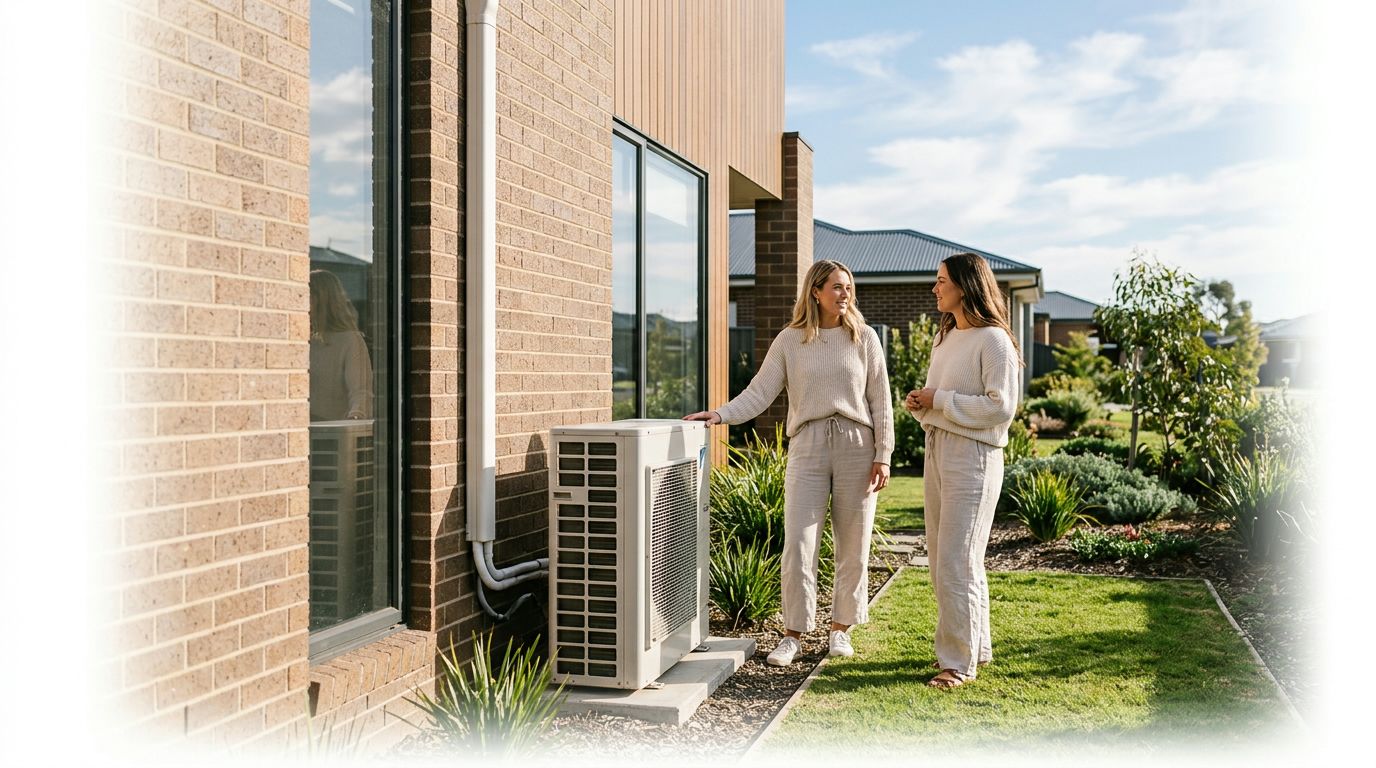
A multi-split air conditioner is a single outdoor unit connected to two, three, four or more indoor units, each controlled independently. If you own a North Shore terrace or an Inner West semi and want to cool the main bedroom, a spare room and the living area without tearing up ceilings for ducted, a multi split air conditioner is the practical middle ground. One compressor outside handles the load while each indoor head does its own job on its own schedule.
The key difference from a standard split system air conditioning setup is scale and shared infrastructure. A single-split system pairs one outdoor unit with exactly one indoor unit. A multi-split pairs one outdoor unit with multiple indoor units, which means fewer penetrations through your walls, one electrical connection point and a tidier installation overall. The trade-off is that the outdoor unit is larger and the upfront cost is higher, but you save on the number of outdoor units cluttering your roof or side passage.
Key takeaways
- A multi split air conditioner connects one outdoor unit to multiple indoor heads for independent zone control
- Ideal for apartments and terraces where ducted systems are impractical or restricted
- More efficient than separate single-splits when multiple zones run simultaneously
How Does a Multi-Split Air Conditioner Work?
A multi-split system works by running refrigerant from a single outdoor compressor through separate pipe runs to each indoor unit. The outdoor unit contains the compressor, condenser and expansion components. Each indoor head has its own evaporator coil and fan, so it can heat or cool its zone independently while sharing the same refrigerant circuit as every other head in the system.
The compressor in a modern multi-split uses inverter technology, which means it does not simply switch on at full power and off again. Instead, it reads the combined demand from all active indoor units and modulates its output continuously to match. If only one bedroom unit is running at 2am, the compressor ramps down to a low, efficient speed. If three zones fire up on a 38-degree afternoon in January, it ramps up to meet the combined load. This is why understanding inverter technology in air conditioners matters so much for multi-split systems. The efficiency gains are real and measurable, particularly when zones are used at different times of day.
Each indoor unit comes with its own remote control, so a teenager in one bedroom can set their room to 20 degrees while the living area runs at 24 degrees. Many systems also support smart controllers or Wi-Fi modules, letting you manage every zone from a single app. Brands like Daikin, Mitsubishi Electric and Fujitsu all offer app-based control options across their multi-split ranges.
Indoor Unit Types Available
Multi-split systems are compatible with several indoor head styles, and the right choice depends on your room layout and home type.
- Wall-mounted units are the most common choice. They are straightforward to install, easy to operate and suit most room sizes. For bedrooms in a Wahroonga Federation home or a Neutral Bay apartment, a wall-mounted head is usually the first recommendation.
- Ceiling cassette units sit flush in the ceiling and distribute air in four directions, making them well suited to open-plan living areas. A cassette head in a Chatswood apartment living room, for example, covers a large floor area without the visual bulk of a wall unit.
- Floor console units sit low on the wall and direct airflow upward. They work well in rooms where wall space is limited or where a high-mounted unit would create uneven heating in winter, such as a sunroom or a converted garage.
You can mix head styles across zones on the same outdoor unit, so a cassette in the living area and wall-mounted units in two bedrooms is a perfectly standard configuration.
Multi-Split vs Single-Split vs Ducted: Which Should You Choose?
Multi-split, single-split and ducted air conditioning each suit a different type of home and budget. A single-split is the lowest-cost entry point for one room. A multi-split covers two to five rooms from one outdoor unit without the ceiling work that ducted requires. Ducted is the right call for larger homes where whole-home conditioning is the goal and the budget supports it.
| Single-Split | Multi-Split | Ducted | |
|---|---|---|---|
| Upfront Cost (AUD, installed) | $1,200 to $2,500 per unit | $3,500 to $6,500 (2-zone) | $8,000 to $20,000+ |
| Number of Rooms Served | One room per unit | Two to five rooms | Whole home |
| Installation Disruption | Low | Low to moderate | High (ceiling work required) |
| Independent Zone Control | Yes (per unit) | Yes (per indoor head) | Partial (zone dampers add cost) |
| Ongoing Running Cost | Low per unit | Moderate, efficient when multiple zones run together | Higher, but efficient for whole-home use |
| Best Suited For | Single rooms, studios, granny flats | Apartments, semis, terraces with two to four rooms | Large homes, new builds, full renovations |
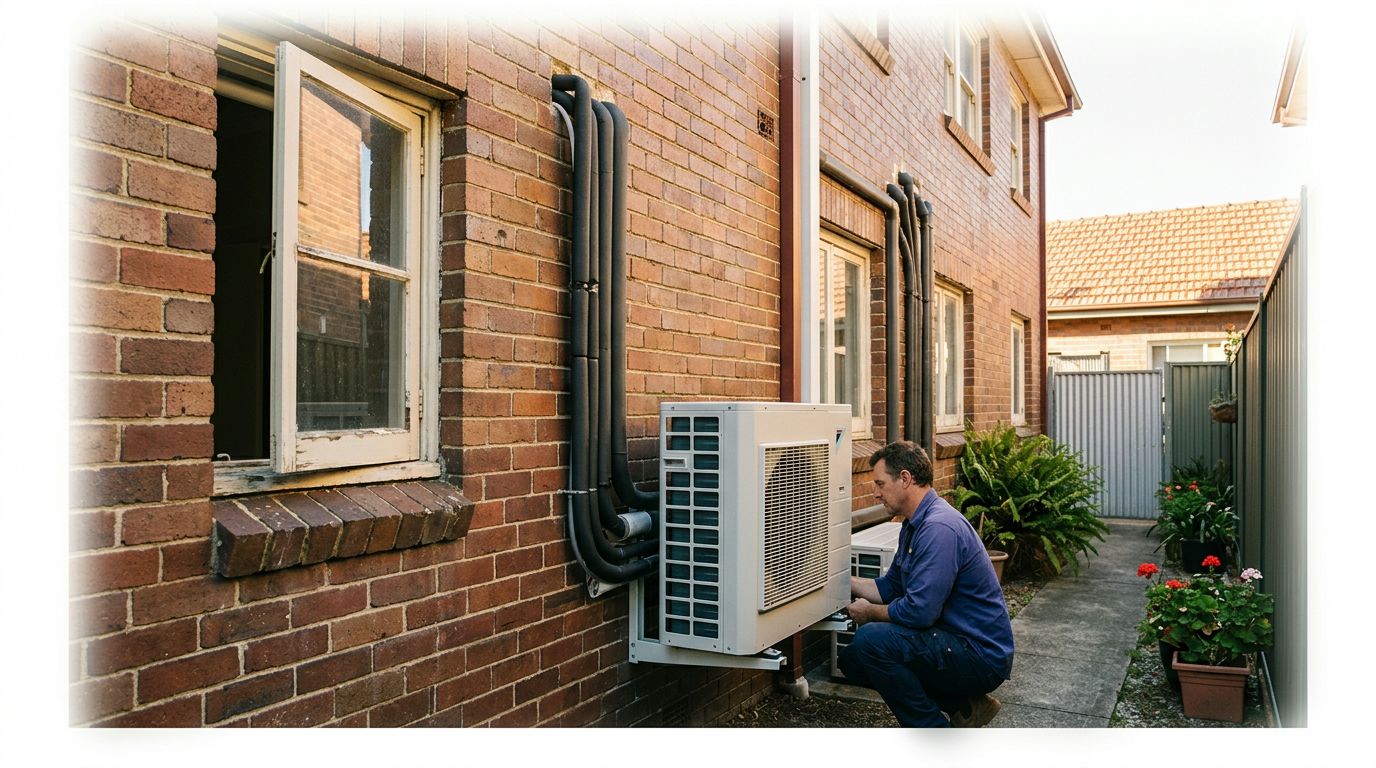
A multi-split system makes the most sense for a two- or three-bedroom apartment, a North Shore semi or an Inner West terrace where you need coverage across several rooms but ducted is off the table. Strata bylaws often restrict additional outdoor units on balconies or rooftops, so consolidating everything into one outdoor unit is not just tidy, it is sometimes the only compliant option. If you are comparing a multi-split against running two or three separate single-split systems, the multi-split wins on exterior aesthetics and wall penetrations, though the upfront cost is usually higher.
Ducted is the right choice when you are conditioning five or more rooms, building new or undertaking a major renovation where ceiling access is already open. The running cost per room can be competitive at scale, but the $8,000 to $20,000+ installation price is a significant commitment. For a detailed look at how these two approaches stack up, our guide to split system or ducted air conditioning covers the decision in full.
Single-split systems remain the best value for a single room or a granny flat. If you only need to cool a master bedroom and nothing else, buying a 2.5kW single-split for around $1,500 installed is hard to argue against. The multi-split only starts to make financial sense once you need two or more rooms served from the same outdoor location.
Pros and Cons of a Multi-Split Air Conditioner
A multi-split air conditioner offers real advantages for Sydney homes with limited outdoor space and multiple rooms to condition, but it also comes with trade-offs that are worth understanding before you commit. Here is an honest look at both sides.
- Single outdoor unit saves space. For a terrace in Balmain or an apartment in North Sydney where the balcony or side passage is narrow, one outdoor unit instead of three is a meaningful difference. Strata committees and neighbours tend to appreciate it too.
- Independent zone control per room. Each indoor head runs on its own schedule and temperature setting. A home office can run at 22 degrees during work hours while the bedrooms stay off until evening.
- Inverter compressor efficiency. Modern multi-split outdoor units use inverter technology to modulate output continuously, which reduces energy waste compared to older fixed-speed systems.
- Less visual clutter on the building exterior. One set of pipe runs and one outdoor unit keeps the facade of a Federation home or a rendered apartment block looking cleaner.
- Mix of indoor unit styles. You can pair a ceiling cassette in the open-plan living area with wall-mounted heads in the bedrooms, all running off the same outdoor unit.
- Single point of failure. If the outdoor unit develops a fault, every indoor head in the house goes down at once. With separate single-split systems, a fault only affects one room.
- Higher upfront cost than separate single-splits. A 2-zone multi-split installed typically costs $3,500 to $6,500. Two separate single-split systems might come in at $2,400 to $5,000 combined, depending on the models chosen.
- Complex pipe runs. Running refrigerant lines to three or four rooms across different floors or through tight wall cavities adds labour time and cost. Long pipe runs can also affect system performance if not sized correctly.
- Capacity must be locked in at design stage. The outdoor unit is sized for a fixed number of indoor heads. Adding a fourth zone to a 3-zone system later is not a simple upgrade. It usually means replacing the outdoor unit entirely.
Is a Multi-Split System More Energy Efficient?
Whether a multi-split system is more energy efficient than separate single-split units depends largely on how you use it. A multi-split compressor is sized to handle the combined load of all its indoor heads. Running all zones simultaneously is where it performs best, spreading the compressor's output efficiently across the full system. Running just one zone on a large multi-split outdoor unit can actually be less efficient than a dedicated single-split sized specifically for that room, because the compressor is working at a low fraction of its designed capacity.
Star ratings and inverter modulation help close this gap. Daikin, Mitsubishi Electric and Fujitsu all offer high-star-rated multi-split options with advanced inverter compressors that handle partial-load operation better than older designs. If your household tends to run two or more zones at the same time, a quality multi-split will hold its own on running costs. If you realistically only ever cool one room at a time, two separate single-splits may serve you better on the electricity bill.
Which Multi-Split Air Conditioner Should You Choose?
The right multi-split system depends on how many zones you need, the combined cooling and heating load across those rooms and your budget. AirFlow Australia installs Daikin, Mitsubishi Electric and Fujitsu multi-split systems across Sydney, and each brand has a clear sweet spot. Here are three configurations worth considering, with indicative installed prices for 2026.
Daikin MXS50LVMA with 2x FTXM25 Indoor Heads (2-Zone)
The Daikin MXS50LVMA paired with two FTXM25 wall-mounted indoor heads is our go-to recommendation for a 2-zone setup. It suits a bedroom-plus-living configuration or two bedrooms in a North Shore apartment where space on the balcony or side passage is tight. Daikin's build quality and after-sales support are consistently strong, and the FTXM25 heads are quiet enough for bedroom use. Expect an indicative installed price of $4,500 to $5,500 for a standard installation.
Mitsubishi Electric MXZ-3F54VF (3-Zone)
For a three-bedroom semi or terrace in the Inner West, the Mitsubishi Electric MXZ-3F54VF is a well-priced 3-zone outdoor unit with a strong track record in Sydney homes. Mitsubishi Electric's Hyper Heating inverter technology handles Sydney's cooler winter nights efficiently, and the system pairs with a wide range of indoor head styles including wall-mounted and ceiling cassette units. Indicative installed price sits at $6,000 to $7,500 depending on pipe run complexity and the indoor heads selected.
Fujitsu AOTG24LBLA (3-Zone)
The Fujitsu AOTG24LBLA is a reliable mid-range 3-zone alternative that deserves serious consideration. Fujitsu has a long-standing reputation for quiet indoor unit operation, which makes it a natural fit for bedroom zones in Wahroonga or Pymble homes where noise sensitivity is high. The indicative installed price of $5,500 to $7,000 positions it between the Daikin 2-zone and the Mitsubishi Electric 3-zone on cost, while still delivering solid energy efficiency and app-based control.
Get the Sizing Right Before You Commit
Whichever system you choose, correct sizing is the most important decision in the whole process. The outdoor unit must be matched to the combined kW load of all indoor heads, accounting for room size, ceiling height, glazing, insulation and orientation. Online calculators give rough estimates at best. A licensed installer will measure each zone properly and confirm the outdoor unit capacity before anything is ordered. For a clear picture of what that process looks like on the day, read our guide to split system air conditioning installation so you know exactly what to expect.
Frequently Asked Questions About Multi-Split Air Conditioners
Can a multi-split air conditioner heat and cool?
Yes. All modern multi-split systems sold in Australia operate as reverse-cycle units, meaning they both heat and cool. Each indoor head can be set to heating or cooling mode independently, so one zone can run heating while another runs cooling if needed. This makes them a practical year-round solution for Sydney homes.
How many rooms can a multi-split system cover?
Most residential multi-split systems support two to five indoor units from a single outdoor unit. The exact number depends on the outdoor unit's total capacity and the combined load of the indoor heads connected to it. Going beyond five zones typically pushes you into commercial multi-split or VRF territory, which involves different equipment and higher costs.
Is a multi-split system more expensive to run than separate split systems?
Running costs depend on how many zones you use at once. A multi-split is most efficient when two or more zones run simultaneously, as the inverter compressor spreads its output across the full system. Running a single zone on a large multi-split outdoor unit can be slightly less efficient than a dedicated single-split sized for that room alone. For households that regularly use multiple rooms at the same time, the difference in running costs is minimal.
Do I need strata approval for a multi-split system?
In most cases, yes. Strata schemes in New South Wales require owners to seek approval before installing any air conditioning system that involves changes to the building exterior, including mounting an outdoor unit on a balcony, rooftop or external wall. The advantage of a multi-split is that you are seeking approval for one outdoor unit rather than two or three, which often makes the application more straightforward. Always check your strata by-laws and submit a written request before installation begins.
How long does a multi-split air conditioner last?
A well-maintained multi-split system from a reputable brand typically lasts 12 to 15 years. The outdoor compressor is the component most subject to wear, and regular servicing, including cleaning filters and checking refrigerant levels, extends its life considerably. Brands like Daikin, Mitsubishi Electric and Fujitsu all offer spare parts availability well beyond the standard warranty period, which is worth factoring in when choosing a system.
Talk to AirFlow Australia About Your Multi-Split Options
A multi-split air conditioner is the practical choice for Sydney homes that need two to four zones without the cost or ceiling disruption of ducted. The key decisions are how many zones you need, which brand suits your home and budget and getting the sizing right from the start. None of those decisions should be made from a product page alone.
AirFlow Australia installs Daikin, Mitsubishi Electric and Fujitsu multi-split systems across Sydney's Inner West and North Shore, from Balmain and Newtown through to Wahroonga, Pymble and Chatswood. We carry out a proper site inspection before recommending any system, measuring each zone and confirming the outdoor unit capacity before anything is ordered.
If you are ready to get a clear picture of what a multi-split will cost and which configuration suits your home, call us on 0423 535 905 or get in touch online to book a free site inspection and quote. No pressure, just straight answers.